Key takeaways:
The Eastlake furniture style emerged from Charles Eastlake’s 1872 publication promoting practical craftsmanship and aesthetic simplicity for the middle class. Between 1870 and 1890, its hallmark features included rectilinear shapes, incised linear carvings, and extensive use of oak and cherry woods. Despite Eastlake’s criticism of machine-made pieces, American manufacturers widely adapted his designs for mass production, influencing domestic architecture notably in California.
What if the ornate Victorian furniture you know was actually designed to be simple and easy to maintain? Eastlake furniture often defies expectations by blending functional design with refined craftsmanship, challenging common assumptions about 19th-century furnishings. This distinctive style, rooted in specific wood types and joinery methods, integrates seamlessly with architectural features across several U.S. regions. Understanding these subtle design and historical details empowers collectors and enthusiasts to accurately recognize and value Eastlake pieces with confidence.
Eastlake Furniture Origins and Charles Eastlake
Hints on Household Taste: Shaping the Movement
The Eastlake movement began in the late 19th century, inspired by Charles Eastlake, an English architect and writer. His influential book, Hints on Household Taste in Furniture, Upholstery, and Other Details, encouraged a fresh approach to furniture design that focused on practicality, craftsmanship, and aesthetic simplicity. Eastlake believed that the furniture in a home should not only look good but also be functional and well-made. Contrary to the popular heavy Victorian styles, he promoted pieces that were easier to clean and more suited for middle-class households.
Eastlake’s practical pricing philosophy, urging prices to be “as cheap as that which is ugly,” was rarely mentioned but shows his focus on affordable furniture without sacrificing taste. The movement he inspired spread quickly, especially in the United States, where American manufacturers adapted his ideas for mass production.
Eastlake’s View on Machine-Made Furniture
While Eastlake appreciated skilled craftsmanship, he was critical of the rampant use of machine-made furniture during his time. He argued that many factory-made pieces lacked true artistic integrity and expression. To him, machine-produced furniture often resembled a skeleton hastily adorned with various moldings, missing the holistic design and thoughtful construction he championed.
Despite this criticism, many manufacturers incorporated his designs into their mass-produced pieces, especially in America. Eastlake himself distanced from the so-called “Eastlake furniture” flooding the market, stating he had “nothing whatever to do” with many of these creations. Nevertheless, this wide exposure helped popularize the style and its key principles.
Eastlake Furniture Hallmarks: Shape, Line, and Ornament
Rectilinear Forms and Incised Decoration
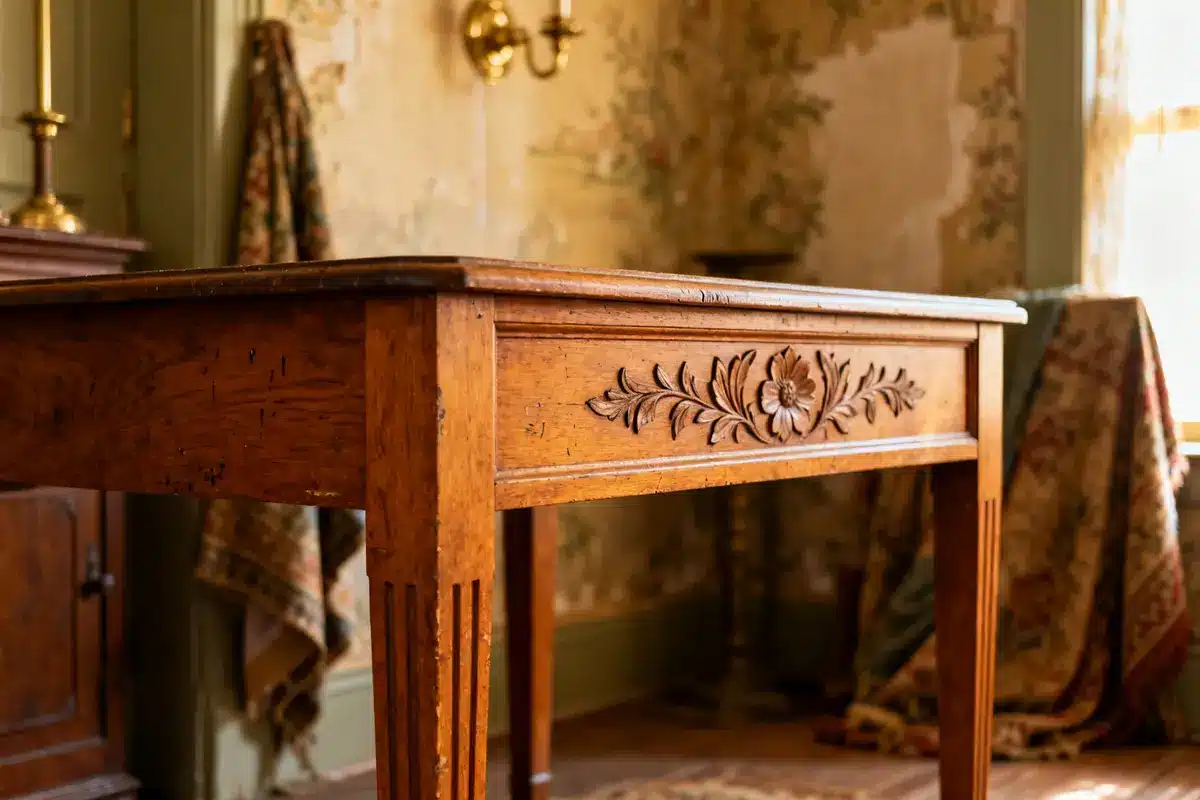
Eastlake furniture is best recognized by its strong emphasis on rectilinear shapes and clean, straight lines. Unlike the curved and upholstered Victorian pieces that came before, Eastlake pieces favored angular, notched, and geometric forms. Common decoration included incised linear carvings, which were shallow and precise, adding a refined touch without overwhelming the piece.
Eastlake preferred solid woods with prominent grain patterns for his designs. Oak and cherry were his favorites due to their beauty and durability, whereas ebonized (blackened) woods were frequently used by manufacturers to simulate richness but are less typical of genuine Eastlake pieces. This contrast aids collectors and historians when identifying authentic samples.
Turnings, Spindles, and Lattice Details
Spindles and turned wooden elements are hallmark features of Eastlake furniture. The style often includes spindled stretchers, chair backs, and drawer pulls that are turned with delicate precision. Alongside these, elaborate latticework and pierced cut-outs give a more open and airy feeling while maintaining structural strength.
Balusters and fretwork are common, especially on cabinets and chairs, to add decorative interest while preserving the functional simplicity Eastlake advocated. These elements come together to create elegant yet practical pieces that lend well to everyday use.
Author’s Note
“When identifying Eastlake furniture, always consider the design intent of ease of cleaning—this key but often overlooked feature shaped much of Eastlake’s reformist approach.”
Eastlake Influence Across the United States
Notable Eastlake Buildings in California
The Eastlake movement had a profound impact on American architecture, especially in California during the late 1800s. Several well-preserved Eastlake-style homes showcase the typical decorative elements of the movement, like turned porch posts, spindles, and sunburst motifs.
For example, the William S. Clark House in Eureka features an elaborately decorated entrance porch adorned with buttons, brackets, and pierced cylinders. Sunburst pediments and stickwork lattice also highlight the gables and bays, blending the ornate with the practical. Another iconic example is the Winters House in Sacramento, notable for its decorative balustrades and scrollwork sunbursts that exemplify Eastlake’s use of detailed wooden ornamentation combined with functional design.
The San Francisco and Los Angeles Adaptations
In urban centers like San Francisco and Los Angeles, the Eastlake style adapted to the denser city environment and combined with other Victorian styles. The so-called “San Francisco Style” merged Eastlake spindlework with Italianate and Second Empire elements, creating unique facades with perforated gables, elaborate friezes, and lattice details.
In Los Angeles, neighborhoods such as Angelino Heights and Echo Park contain rows of Eastlake-style homes famous for their detailed porch railings and turned balusters. Some of these buildings even gained pop-culture fame, appearing in television and film, which has helped preserve the architectural legacy and public interest in Eastlake’s approach to design.
How to Identify Eastlake Furniture Today
Wood Types and Joinery Clues
Authentic Eastlake furniture tends to be crafted primarily from oak or cherry wood, which allow the natural grain to add character to the piece. In contrast, many mass-produced variations frequently use ebonized wood to imitate more expensive finishes. Checking the wood type can offer a useful first step in identification.
When inspecting joints, genuine Eastlake pieces commonly feature traditional joinery methods such as mortise and tenon or dovetail joints, which provide strength without excess ornamentation. These joints align with Eastlake’s belief in well-constructed, honest furniture rather than flashy assembly shortcuts.
Finish, Ornament, and Hardware Cues
Eastlake furniture finishes usually emphasize the natural beauty of the wood with clear varnishes or light stains rather than heavy paint. The ornamentation is deliberate but restrained—incised lines, shallow carvings, and geometric forms predominate. Hardware, such as drawer pulls and hinges, is often simple and functional but can include subtle turning or faceting to match the furniture’s overall style.
One distinct feature is the furniture’s design for ease of cleaning. Surfaces tend to be smooth without excessive crevices or deep carvings that collect dust. This aspect reflects Eastlake’s practical mindset toward household pieces, setting his furniture apart from other Victorian styles that prioritized decoration over upkeep.
🛠️ Eastlake Furniture Age Estimator Tool
Enter details about your Eastlake furniture to estimate its likely production period based on key features.
Collecting and Caring for Eastlake Pieces
Dating Cues for Eastlake Furniture
To date Eastlake furniture accurately, look for specific design features typical of the 1870 to 1890 period. Pieces with fine incising, rectilinear shapes, and oak or cherry wood generally point to authentic originals from this era. Joinery style also helps narrow down age, with dovetail or mortise-and-tenon joints suggesting earlier craftsmanship.
Signs of machine-made elements or extensive ebonizing may signal later reproductions. Hardware can offer additional dating clues, as original Eastlake pieces typically use simple, functional brass or iron fittings rather than elaborate new hardware.
Care, Restoration, and Value Considerations
Proper care of Eastlake furniture involves gentle cleaning to preserve the wood finish and delicate carvings. Avoid harsh chemicals that could degrade the natural wood oils or damage incised details. Since Eastlake pieces were designed to be easy to clean, wiping surfaces regularly with a soft cloth helps maintain their condition.
Restoration should aim to retain original finishes and hardware as much as possible. Over-restoration can reduce value, so minimal intervention is preferred. Genuine Eastlake furniture with intact ornamentation and finish commands higher prices, especially well-preserved oak or cherry examples with period-correct brasses.
- Use mild soap and water sparingly for cleaning
- Polish with a natural beeswax or specialist furniture wax
- Avoid refinishing that removes original patina or carvings
- Retain original joinery and hardware whenever possible
FAQ: eastlake furniture
What time period is Eastlake furniture?
Eastlake furniture dates mainly from the 1870 to 1890 period. It represents a late 19th-century movement focusing on practical design and fine craftsmanship inspired by Charles Eastlake’s ideas about household taste.
How to identify Eastlake furniture?
To identify Eastlake furniture, look for rectilinear shapes, incised linear carvings, turned spindles, and use of oak or cherry wood. Traditional joinery such as dovetail or mortise-and-tenon joints and finishes highlighting natural wood grain also indicate Eastlake style.
How to tell a real Eastlake from a fake?
Real Eastlake furniture uses solid oak or cherry wood, precise incised decorations, and skilled joinery like dovetails. Fakes often use ebonized wood and machine-made parts with overdone ornamentation. Genuine pieces were designed for ease of cleaning and practical use.
What type of wood is Eastlake furniture made of?
Eastlake furniture is primarily made of oak and cherry wood, chosen for their durability and visible grain patterns. Some mass-produced variants used ebonized wood, but authentic Eastlake pieces emphasize natural wood beauty over simulated finishes.
What are the key design features of Eastlake furniture?
Key design features of Eastlake furniture include strong rectilinear forms, shallow incised linear carvings, turned spindles, latticework details, and simple, functional hardware. The overall style merges elegance with practical ease of cleaning and use.
How did the Eastlake style influence American architecture?
The Eastlake style influenced American architecture by inspiring decorative elements such as turned porch posts, spindles, sunburst motifs, and latticework, especially in California. Many Victorian homes in San Francisco and Los Angeles display these distinctive features, blending practicality with ornamentation.

Damian is an inquisitive writer with a passion for exploring diverse subjects. He loves sharing fresh perspectives, inspiring curiosity, and sparking meaningful conversations. For him, every topic is an opportunity to learn, connect, and uncover new ideas.