Key takeaways:
A vintage bar cart generally spans 30 to 40 inches wide and weighs between 30 to 50 pounds, distinguishing it from the typically smaller and lighter drinks trolley. Key design elements include metal wheel casters for smooth mobility and finishes like lacquered wood and polished brass that define its mid-century character. Robust construction with materials such as teak and chrome ensures both functionality and aesthetic appeal in vintage pieces.
Have you ever wondered what truly sets vintage bar carts apart from other serving furniture? Beyond mere aesthetics, the diversity in construction methods and design nuances plays a vital role in usability and style for collectors and entertainers alike. These carts combine durability with mobility, offering distinctive materials and craftsmanship that reflect their era’s values. Understanding the core features and differences equips you to select or appreciate vintage bar carts that blend perfect functionality with their unique, enduring charm.
Vintage Bar Cart: What It Is vs Drinks Trolley
Drinks Trolley vs Bar Cart: Quick Distinctions
A vintage bar cart is a mobile piece of furniture designed for storing and serving alcoholic beverages, along with glassware and bar tools. Drinks trolleys serve a similar purpose but often have slightly different design cues and intended uses. Typically, a drinks trolley measures between 24 to 36 inches wide and 18 to 24 inches deep, making it generally more compact than a bar cart, which can span 30 to 40 inches wide and up to 30 inches deep. Weight also differs: drinks trolleys tend to be lighter, usually around 15 to 25 pounds, while bar carts can weigh 30 to 50 pounds due to more substantial materials and structural elements.
Bar carts usually feature two or three sturdy shelves and are designed with extended handles and locking casters for stability and easy maneuvering. Drinks trolleys prioritize portability, often folding or nesting features for easier storage. Both prioritize functionality but vary in scale and mobility to suit different entertaining needs.
Core Features and Finishes of Vintage Bar Carts
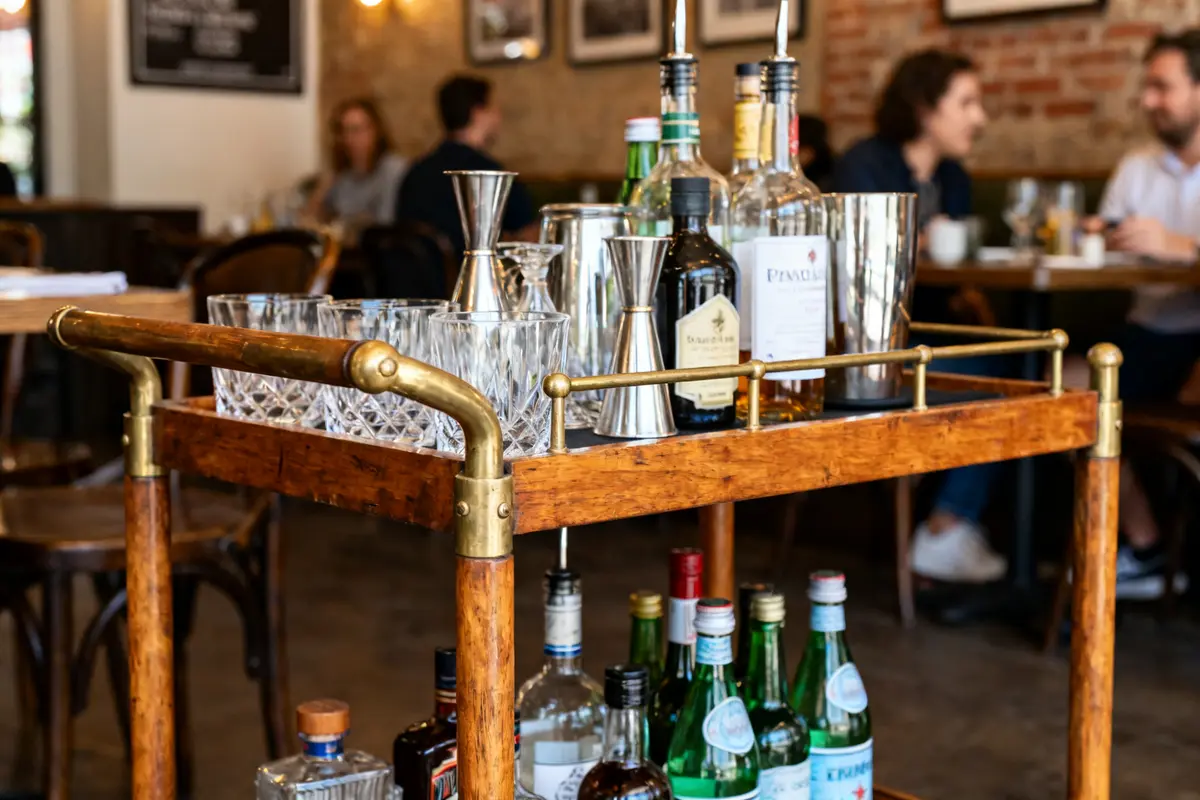
Vintage bar carts are distinguished by key features such as multiple tiered shelves, often with raised edges to prevent spills. Common finishes include polished brass, chrome plating, lacquered wood, and occasionally mirrored accents. These finishes not only add style but protect surfaces and contribute to a bar cart’s iconic mid-century charm.
Wheels or casters are essential for mobility. Quality vintage bar carts often have metal wheel casters with smooth rolling mechanisms that consider both durability and ease of movement. Handles are typically integrated into the frame, crafted to complement the overall design while providing control when rolling.
Common Materials and Construction Methods
Common materials for vintage bar carts include brass, chrome, solid wood like teak or walnut, glass shelves, and occasionally acrylic. Construction techniques often involve meticulous joinery, with brass or metal frames welded or screwed together. Shelf supports may use hinges or metal clips, enabling certain models to fold or expand.
Hardware like wheel casters and hinges plays a crucial role in the overall function and longevity of the cart. Vintage casters usually have ball-bearing wheels housed in brass or steel mounts, enhancing mobility while offering enduring strength. Hinges on folding models are generally brass-plated, which resists corrosion and maintains aesthetic appeal over time.
Mid-Century Styles: Makers & Materials
The mid-century period favored sleek, functional design paired with quality materials. Celebrated makers like Arthur Umanoff and Joe Colombo created bar carts with minimalist frames and elegant wood finishes. Teak was a particularly popular choice, prized for its rich grain and resilience.
Many mid-century bar carts combine wood with metal accents or glass shelves, balancing warmth with industrial flair. Brass details or lacquered surfaces often highlight these pieces, reflecting the era’s love of glamour without excess.
When sourcing a vintage bar cart, look for hallmark mid-century materials that blend utility with clean lines. Attention to the quality of craftsmanship often extends to the chosen hardware, with makers opting for casters and fasteners that promise smooth mobility and structural reliability.
Author’s Note
“Always assess the condition of the wheels and frame joints first; they reveal a lot about how well the cart will function and last in your space.”
Italian & French Masterpieces: Bar Carts Worth Knowing
Italy and France have produced some of the most spectacular vintage bar carts, combining craftsmanship with luxurious design. Italian bar carts often exhibit meticulous marquetry, combining exotic woods with brass hardware. Makers like Paolo Buffa brought refined elegance and inventive forms to the market, frequently adding intricate inlays and sculpted brass accents.
French designs typically favor polished brass frames with glass or mirrored surfaces, creating light, airy pieces perfect for stylish entertaining. Maison Jansen is a name synonymous with luxury bar carts, frequently crafting models with circular tiers and ornate brass details.
Both Italian and French vintage bar carts emphasize refined finishes and eye-catching details. These masterpieces are notable not just for their materials but for design signatures such as gilt metals, delicate casters, and seamless joinery that make them highly collectible today.
Buying, Restoring, and Using a Vintage Bar Cart
Evaluating Condition and Restoration Quality
Buying a vintage bar cart requires keen observation. Look closely at the patina; high-quality restoration will preserve at least 70% of the original finish, retaining character without masking age. Replacement parts, such as casters or hinges, should be fewer than 15% of the total hardware to maintain authenticity. Signs of expert restoration include smooth operation of wheels and hinges, seamless refinishing, and stable shelves without wobble.
Check for signs of rust or structural weakness in metal frames, as these affect usability. Wood surfaces should be free of large cracks or warping. A well-maintained bar cart combines original charm with mechanical reliability, making it both a collector’s piece and a functional item.
Reading Maker Marks and Provenance
Many vintage bar carts bear maker marks on the frame, underside, or inside drawers. These marks help verify authenticity and origin. Italian makers often include stamped or burned-in labels, while French pieces sometimes have etched signatures on brass fittings.
Provenance enriches value. Documentation, original invoices, or past owner history adds credibility. Knowing the maker, period, and previous maintenance history can guide your purchasing decision, ensuring you invest in a genuine quality piece that fits your collection or home setup.
🛒 Vintage Bar Cart Size & Fit Calculator
Estimate the perfect size for your vintage bar cart based on room dimensions and desired clearance space.
Caring for and Displaying Your Bar Cart
Proper care extends the life and beauty of your vintage bar cart. Keep it away from direct sunlight to prevent fading or drying out of wooden finishes. Dust regularly with a soft cloth and avoid abrasive cleaners that can damage delicate brass or lacquer surfaces.
To protect wheel casters, wipe down rolling mechanisms and check for debris that could impede smooth movement. If your vintage bar cart has glass shelves, clean them with a gentle glass cleaner, taking care not to let liquid drip into joints or hardware.
For display, consider placing your bar cart near seating areas or next to a dining table to enhance its functionality and decorative impact. Utilize lighting to highlight metallic finishes and beautiful wood grains, making it a focal point in your space. Feel free to accessorize with vintage glassware, cocktail shakers, or even a small indoor plant to add personality and style.
FAQ: vintage bar cart
What is a vintage bar cart?
A vintage bar cart is a mobile piece of furniture designed for storing and serving alcoholic beverages, glassware, and bar tools. It features multiple tiered shelves, quality wheels or casters, and often has stylish finishes like brass, chrome, or lacquered wood.
What is the difference between a drinks trolley and a bar cart?
The difference between a drinks trolley and a bar cart lies mainly in size and design. Drinks trolleys are more compact, lighter, and prioritize portability, sometimes folding for storage. Bar carts are larger, heavier, with sturdy shelves, extended handles, and locking casters for stability.
How can you evaluate the condition of a vintage bar cart before buying?
To evaluate a vintage bar cart’s condition, inspect the patina and ensure restoration preserves original finishes. Check for less than 15% replaced hardware like casters or hinges. Test wheel and hinge operation for smoothness and stability. Avoid rust, structural weaknesses, or warped wood surfaces.
What are common materials used in vintage bar cart construction?
Common materials in vintage bar carts include brass, chrome, solid woods like teak or walnut, glass shelves, and occasional acrylic. Construction involves metal frames welded or screwed together, brass-plated hinges, and durable ball-bearing wheel casters to ensure longevity and mobility.
What are notable features of mid-century vintage bar carts?
Mid-century vintage bar carts highlight minimalist frames, elegant wood finishes such as teak, and a blend of wood with metal or glass. They often include polished brass details, lacquered surfaces, and high-quality craftsmanship emphasizing clean lines and functional design.
How should you care for and display a vintage bar cart?
To care for a vintage bar cart, keep it out of direct sunlight, dust with a soft cloth, and avoid abrasive cleaners. Clean wheels and glass shelves gently. Display near seating or dining areas with lighting to highlight finishes. Accessorize with vintage glassware or plants to enhance style and function.

Damian is an inquisitive writer with a passion for exploring diverse subjects. He loves sharing fresh perspectives, inspiring curiosity, and sparking meaningful conversations. For him, every topic is an opportunity to learn, connect, and uncover new ideas.