
Transform your living room on any budget by learning simple techniques that turn basic materials into beautiful furniture pieces. This guide reveals exactly how to build a stunning DIY coffee table that matches your style perfectly, whether you prefer rustic charm or sleek modern lines. You’ll discover money-saving tricks, avoid common beginner mistakes, and master essential skills that naturally develop your confidence for future woodworking projects.
How can you create your own DIY coffee table?
Creating your own DIY coffee table lets you build a custom piece that perfectly fits your space and style while saving money compared to store-bought furniture. The process involves selecting materials, gathering basic tools, and following simple construction steps that most people can complete in just 4-6 hours.
You can start with basic materials like reclaimed wood, plywood, or even repurposed items from around your home. The beauty of making your own table lies in the complete control you have over size, design, and finish.
Before diving in, measure your space carefully. Most coffee tables work best at around 48 inches long, 24 inches wide, and 18 inches high, but you can adjust these dimensions to suit your room perfectly.
DIY coffee table ideas for every style
Your homemade coffee table can match any design aesthetic with the right approach to materials and finishing. Different styles require specific techniques and materials to achieve the look you want.
Rustic and farmhouse-inspired designs
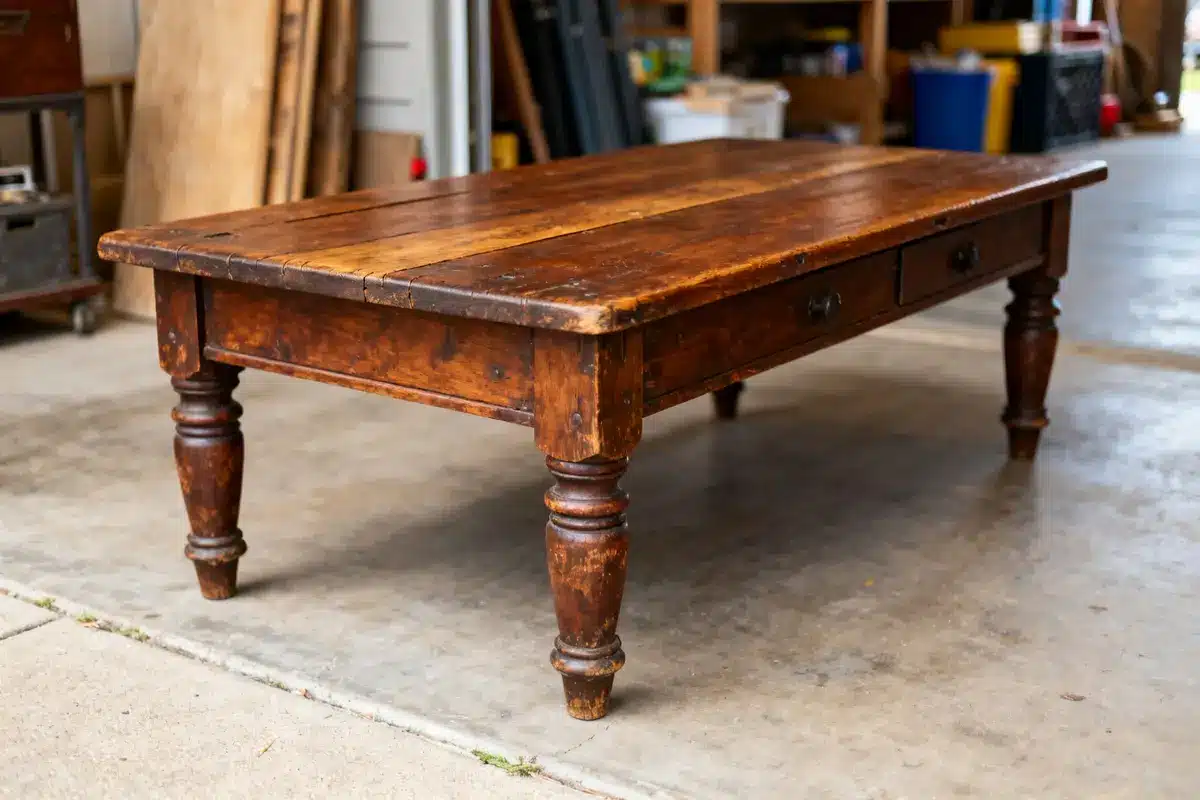
Rustic coffee tables bring warmth and character to any room through distressed wood and weathered finishes. We recommend using reclaimed barn wood or pallet wood for authentic texture and natural imperfections that tell a story.
Metal accents like wrought iron brackets or vintage-style corner pieces add the perfect farmhouse touch. Distressing techniques such as sanding edges and using steel wool create that well-loved appearance that makes rustic furniture so appealing.
Staining with darker colors like walnut or ebony enhances the wood grain while maintaining that country feel. You can also leave some areas unstained for a two-tone effect that looks naturally aged.
Modern and minimalist options
Clean lines and sleek surfaces define modern coffee table designs. Choose smooth plywood or MDF for the tabletop, then pair it with hairpin legs or metal pipe legs for that contemporary industrial look.
Neutral colors work best for minimalist designs. White, gray, or natural wood tones keep the focus on form rather than decorative elements. The key is simplicity in both construction and finishing.
Geometric shapes like perfect rectangles or circles create visual interest without clutter. We suggest avoiding decorative hardware or ornate details that might compete with the clean aesthetic.
Essential tools and materials for building a coffee table
Having the right tools makes your project smoother and safer. You don’t need a fully equipped workshop, but certain items are absolutely necessary for good results.
Your basic tool list should include:
- Saw (hand saw or circular saw for cutting wood to size)
- Drill with various bits for pilot holes and screws
- Measuring tape and pencil for accurate marking
- Sandpaper or electric sander for smooth finishes
- Safety gear including goggles and work gloves
- Brush or roller for applying stain or paint
Material costs can stay surprisingly low. Pallet wood, one of the most budget-friendly options, typically costs just $10-$20 for enough material to build a small coffee table. Plywood offers another economical choice with consistent quality and easy handling.
Furniture-grade wood costs more but provides better durability and appearance for pieces you plan to use daily. Pine, oak, and maple are popular choices that balance cost with quality.
Step-by-step guide to constructing your DIY coffee table
Breaking down the construction process into clear steps helps ensure success, even if you’re new to woodworking. Take your time with each phase for the best results.
Preparing your workspace and planning
Set up your work area in a well-ventilated space with good lighting and enough room to move around your project safely. Clear away clutter and lay out all your tools and materials before starting.
Sketch your design on paper first, including all measurements. Double-check dimensions against your available space to avoid building something that doesn’t fit where you need it.
Cut all your pieces to size before moving to assembly. Measure twice and cut once – this old saying saves time and materials. Sand any rough edges now while the pieces are easy to handle.
Assembly and finishing touches
Start assembly by drilling pilot holes to prevent wood splitting. This extra step takes a few minutes but prevents cracked boards that could ruin your project.
Attach legs or supports first, then add the tabletop. Use wood screws rather than nails for stronger joints that won’t work loose over time. Check that everything sits level before tightening all connections completely.
Sand the entire assembled table with fine-grit sandpaper for smooth surfaces. Apply your chosen finish – whether stain, paint, or clear sealant – in thin, even coats following the manufacturer’s directions.
Personalizing your DIY coffee table with decor and color
Personal touches transform a basic table into a conversation piece that reflects your unique style. Color choices and decorative elements let you create something truly one-of-a-kind.
Paint opens up endless possibilities for customization. Chalk paint provides easy application and a matte finish that works beautifully for vintage-inspired pieces. Bold colors like navy blue or mustard yellow can turn your table into a striking accent piece.
Geometric patterns painted on the tabletop add visual interest without overwhelming the design. Use painter’s tape to create clean lines for stripes, chevrons, or other repeating patterns.
Hardware details like decorative drawer pulls or metal corner brackets can enhance both function and appearance. Even a simple table benefits from these small but impactful additions.
Budget-friendly tips for creating a DIY coffee table
Smart shopping and creative material choices keep costs down without sacrificing quality. Many successful projects cost under $50 when you know where to look for supplies.
Hairpin legs from retailers like Home Depot typically cost $15-$30 per set and instantly give any tabletop a professional, modern appearance. This small investment makes a big difference in the finished look.
Upcycled materials offer significant savings and unique character. Old wooden crates, repurposed furniture parts, or even sturdy cardboard boxes can become the foundation for creative coffee table designs.
Check garage sales, estate sales, and online marketplaces for materials. Sometimes you’ll find solid wood furniture that costs less to buy and modify than purchasing new lumber would.
Common mistakes to avoid when making your DIY coffee table
Learning from others’ experiences helps you avoid frustrating setbacks that can derail your project. These common pitfalls are easy to prevent with a little advance planning.
Improper measurements cause more project failures than any other single issue. Always measure your space and double-check your cutting dimensions before making any cuts. An uneven or wobbly table results from rushing through the measuring phase.
Skipping safety gear might seem like a time-saver, but eye injuries and cuts can turn a fun project into a medical emergency. We always recommend wearing safety glasses and gloves when using power tools or handling rough lumber.
Starting with overly complex designs often leads to frustration and abandoned projects. Begin with simple rectangular tables and master basic techniques before attempting curved cuts or intricate joinery work.
FAQ
What materials do I need to build a DIY coffee table?
Materials needed to build a DIY coffee table include wood boards like 2x4s or plywood, wood glue, screws, wood dowels, clamps, sandpaper, stains or paint, and essential tools like saws, drills, and measuring devices. Choose materials based on your design and budget preferences.
How do I build the frame or legs for a coffee table?
To build the frame or legs for a coffee table, cut wood to size, ensuring to make angled cuts for style if desired. Assemble pieces using screws for strong joints. Always double-check measurements to ensure proper sizing, creating a sturdy and visually appealing base for your table.
How long does it take to build a DIY coffee table?
Building a DIY coffee table typically takes about 4-6 hours, depending on your experience and the complexity of your design. This timeframe includes gathering materials, preparing your workspace, assembling the table, and applying finishes. Taking your time ensures better results.
What are some common mistakes to avoid when making a DIY coffee table?
Common mistakes to avoid when making a DIY coffee table include improper measurements, which can lead to an unstable table, and skipping safety gear, risking injuries. Additionally, starting with overly complex designs can lead to frustration; begin with simpler shapes to build skills.

Damian is an inquisitive writer with a passion for exploring diverse subjects. He loves sharing fresh perspectives, inspiring curiosity, and sparking meaningful conversations. For him, every topic is an opportunity to learn, connect, and uncover new ideas.