Ever wondered why certain furniture pieces command thousands of dollars and appear in luxury hotels worldwide? The Barcelona Chair Mies van der Rohe naturally captivates design lovers with its perfect blend of steel and leather, but understanding its royal origins, iconic X-frame construction, and lasting influence on modern furniture helps explain why this nearly 100-year-old design remains so coveted today.
What makes the Barcelona chair Mies van der Rohe a design icon?
The Barcelona Chair Mies van der Rohe stands as one of the most recognizable pieces of furniture from the 20th century. This chair combines simple lines with elegant materials to create something truly special.
What sets this chair apart is its perfect balance of form and function. The design strips away everything unnecessary, leaving only what’s needed for both beauty and comfort. This approach made it a symbol of modernist design philosophy.
The chair’s timeless appeal comes from its clean geometry and premium materials. Chrome-plated steel meets luxurious leather in a way that looks just as fresh today as it did nearly 100 years ago. Many high-end hotels and museums choose this chair because it represents sophistication and quality.
The history behind the Barcelona chair Mies van der Rohe
The story begins in 1929 when designers created this chair for the German Pavilion at the International Exposition in Barcelona, Spain. The pavilion itself became famous for showcasing modernist architecture and design principles.
Ludwig Mies van der Rohe worked alongside Lilly Reich to bring this vision to life. They wanted furniture that would match the pavilion’s revolutionary architectural style. The chair needed to impress visitors while demonstrating German craftsmanship and design innovation.
The original purpose was quite specific – to provide seating for Spanish royalty during the exposition’s opening ceremony. This royal connection added to the chair’s prestige from the very beginning. The designers succeeded in creating something that went far beyond its original purpose, becoming a lasting symbol of modern design.
Key design features of the Barcelona chair Mies van der Rohe
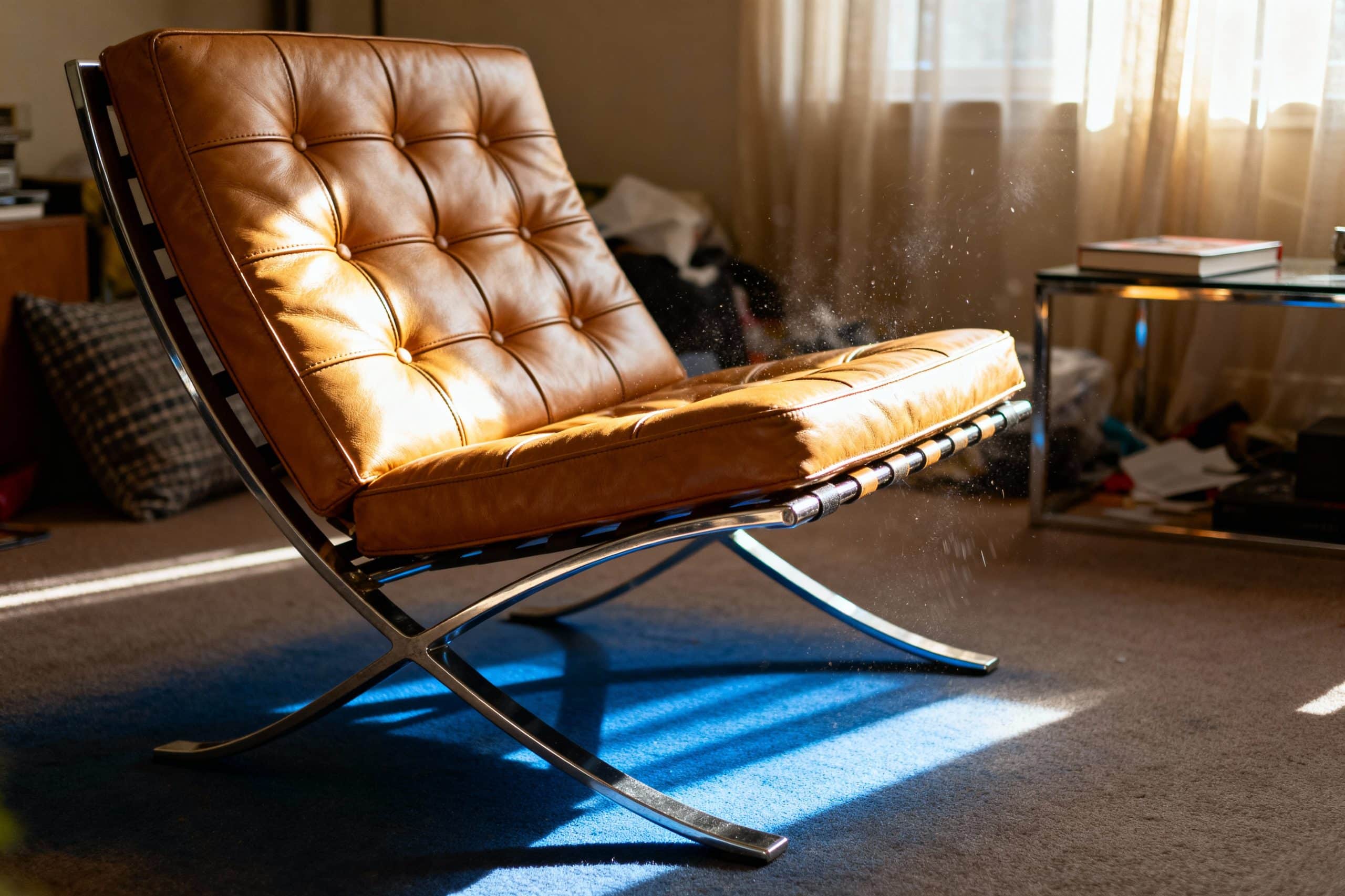
The Barcelona Chair Mies van der Rohe features several distinctive elements that make it instantly recognizable. The most striking aspect is its X-shaped frame, which creates both structural support and visual interest.
Materials used in the Barcelona chair Mies van der Rohe
Premium materials define this chair’s character. The frame uses chrome-plated steel that provides durability while maintaining a mirror-like finish. This choice of metal gives the chair its distinctive shine and helps it resist corrosion over time.
The cushions feature high-quality leather upholstery, most commonly found in black, white, or cognac colors. This leather goes through special treatments to achieve the right texture and appearance. The leather pieces are carefully sewn together with detailed button tufting that adds both visual appeal and structural integrity.
The unique construction of the Barcelona chair Mies van der Rohe
The construction method sets this chair apart from typical furniture pieces. The steel frame uses a four-piece construction with cross-bars that form the main structure. This approach creates exceptional stability while maintaining the chair’s light, floating appearance.
Each frame piece connects through a unique interlocking design. This engineering approach eliminates the need for visible bolts or screws, keeping the clean lines intact. The cushions rest on leather straps that stretch across the frame, providing comfortable support without additional hardware.
The influence of the Barcelona chair on modern furniture design
This iconic piece shaped how designers think about combining metal and leather in furniture. Many contemporary lounge chairs draw inspiration from its aesthetic and ergonomic principles. The emphasis on clean lines and quality materials became a blueprint for luxury furniture design.
Modern minimalist collections often reference this chair’s approach to reducing elements to their essentials. Design schools frequently study it as an example of how to balance visual impact with practical function. The chair appears regularly in design exhibitions and academic studies about 20th-century furniture.
Furniture makers continue to explore variations on its X-shaped frame concept. The combination of structural innovation and material luxury established standards that many designers still strive to meet today.
Where to buy authentic Barcelona chairs and replicas
Authentic Barcelona chairs typically retail for around $6,000 to $8,000 through authorized dealers like Knoll. These prices reflect the premium materials and craftsmanship that go into each piece. Authorized dealers provide certificates of authenticity and proper warranties.
High-quality replicas offer a more accessible option, with prices ranging from $900 to $2,500. We advise buyers to research manufacturers carefully, as quality varies significantly among replica producers. Some flat-packed versions are available for easier shipping and assembly.
Key factors to consider when purchasing include:
- Verify seller credentials and authenticity guarantees
- Check material specifications and construction details
- Compare warranty terms and customer service options
- Read reviews from previous customers about durability
How to care for your Barcelona chair Mies van der Rohe
Proper maintenance keeps your chair looking beautiful for decades. We advise regular cleaning with a soft, damp cloth for the chrome frame. Avoid harsh chemicals that might damage the metal’s finish or cause discoloration.
The leather cushions need special attention to maintain their appearance and flexibility. Use quality leather conditioners every few months to prevent cracking and fading. Keep the chair away from direct sunlight, which can cause the leather to fade and become brittle over time.
Regular inspections help catch small problems before they become serious issues. Check the frame for scratches or signs of corrosion, especially around connection points. Address any damage promptly to preserve both the chair’s appearance and structural integrity.
Frequently Asked Questions
Is the Barcelona Chair original Mies van der Rohe?
The Barcelona Chair is originally designed by Mies van der Rohe and Lilly Reich for the 1929 International Exposition in Barcelona. However, many reproductions exist today, so it’s essential to verify authenticity when purchasing to ensure you’re getting the original design.
What is so special about a Barcelona Chair?
The Barcelona Chair is special due to its perfect blend of form and function, combining elegant materials with minimalistic design. Its timeless appeal is rooted in the quality of craftsmanship and materials, making it a lasting symbol of modernist furniture design.
How to tell if a Barcelona Chair is authentic?
To tell if a Barcelona Chair is authentic, check for a certificate of authenticity from authorized dealers. Look for high-quality materials, like chrome-plated steel and genuine leather, as well as precise construction details that signify genuine craftsmanship.
Are Barcelona chairs still made?
Barcelona Chairs are still made today, with authorized manufacturers like Knoll producing the original designs. Additionally, high-quality replicas are available from various sources, allowing broader access to this iconic chair.
What materials are used in the Barcelona Chair?
The Barcelona Chair uses chrome-plated steel for its frame, ensuring durability and a sleek finish. The cushions are upholstered in high-quality leather, often available in black, white, or cognac colors, maintaining both comfort and aesthetic appeal.
What is the history behind the Barcelona Chair?
The history behind the Barcelona Chair begins in 1929, when it was designed for the German Pavilion at the International Exposition in Barcelona. Collaboratively designed by Mies van der Rohe and Lilly Reich, it aimed to represent innovative German craftsmanship and modernist design principles.

Damian is an inquisitive writer with a passion for exploring diverse subjects. He loves sharing fresh perspectives, inspiring curiosity, and sparking meaningful conversations. For him, every topic is an opportunity to learn, connect, and uncover new ideas.