Key takeaways:
The antique coffee grinder evolved notably through the industrial revolution, achieving grind consistency improvements with burr diameters typically between 2 to 3 inches. Materials like cast iron contribute to robust durability, while adjustable burrs enable fine tuning for diverse brewing needs. Collectors and enthusiasts focus on screw sizes from #6 to #10 to ensure authentic restoration and functionality.
Have you noticed that vintage coffee mills offer more than just nostalgic charm? Antique grinders present intricacies in grind mechanism and material selection that directly impact brew quality and durability over decades. These devices combine historical craftsmanship with functional precision, challenging assumptions about manual tools. Understanding how to assess screw sizes and burr types equips enthusiasts to appreciate their full potential and maintain peak performance.
Antique Coffee Grinder: History and Types
Era-Based Highlights
Antique coffee grinders have a rich history dating back to the 18th century when coffee became a popular household staple. Different eras favored unique styles, from the ornate Victorian grinders to the rustic, hand-cranked mills of the early 1900s. Each era reflects advancements in technology and design that contributed to the evolution of the antique coffee grinder.
During the industrial revolution, coffee grinders moved from basic manual tools to more efficient mechanisms, improving grind consistency and durability. Today, collectors prize these models for their craftsmanship and functionality, seeing them as both practical kitchen tools and historic artifacts.
Materials and Mechanisms
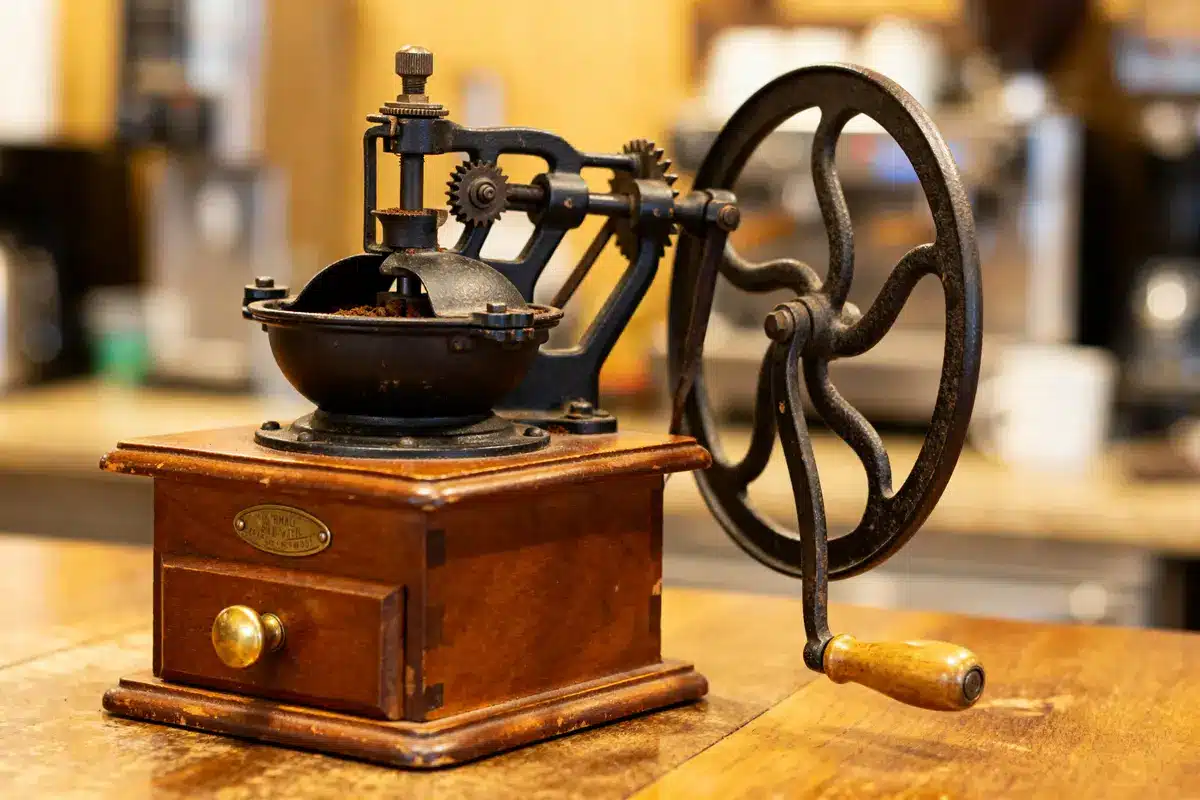
Antique coffee grinders were traditionally made from materials such as cast iron, wood, brass, and sometimes ceramic. The choice of material significantly affects the grinder’s longevity and aesthetic appeal. Cast iron models are known for their robust durability and heavy build. Wooden bodies, often embellished with fine details, give a warm vintage feel.
Mechanisms typically include burr or blade grinders. Burr grinders, with their interlocking gears or burrs, offer a steady and uniform grind. While less common, ceramic burrs were prized for their hardness and resistance to corrosion, though cast iron burrs tend to be more efficient in grind consistency, measurable in microns, with cast iron burrs generally providing slightly finer and more even results.
Restoration of Antique Coffee Grinder
Pre-Assessment Checklist
Before starting restoration, it is crucial to assess the condition of your antique coffee grinder thoroughly. Check for broken or missing parts, rust, and wear on the grinding burrs. Typical screw sizes in vintage grinders range from #6 to #10, with burr diameters commonly around 2 to 3 inches. These precise measurements help to source accurate replacement parts, a detail often overlooked by others.
Understanding these dimensions ensures compatibility during repairs and preserves the grinder’s original function and appearance. Also, assess the handle, hopper, and drawer if present, as they influence operability and design integrity.
Safe Cleaning and Dismantling
When dismantling an antique coffee grinder, use tools designed for precision and care to avoid damaging old components. Avoid harsh chemicals; instead, opt for mild soap and warm water to clean wooden and metal parts. Remove rust carefully using fine steel wool or a rust remover safe for food-contact surfaces.
It’s important to disassemble slowly, noting the position of each part. Keep small components stored safely to avoid loss. Cleaning the burrs thoroughly removes built-up oils and residue, crucial for preserving the grinder’s performance and hygiene.
Reassembly and Lubrication
After cleaning, reassemble the grinder by following the reverse order of dismantling, ensuring all parts fit correctly without forcing. Lubrication of moving parts, especially the burr mechanism, improves smooth operation. Use food-grade lubricants designed not to affect flavor or safety.
Careful reassembly preserves the antique’s mechanical integrity, allowing the grinder to retain its original charm and function. Proper lubrication can prevent wear and extend the life of your valuable antique coffee grinder.
Author’s Note
“Adjusting the burrs with precision unlocks the full potential of antique grinders, blending old-world charm with modern brewing science.”
Using Antique Grinders for Modern Brew
Using an antique coffee grinder can bring a unique, tactile experience to modern brewing methods. It’s vital to understand grind size calibration since antique grinders weren’t designed for today’s varied brew styles.
For example, a grind size of about 800 microns works best for French press brewing, while espresso requires a much finer setting around 200 microns. Adjust the burr spacing accordingly by turning the adjustment mechanism typically found under the hopper or near the handle, to achieve these grind sizes.
Maintaining consistent grind size makes all the difference in flavor extraction and overall cup quality. Antique grinders with their steady burr mechanisms can offer this, making them excellent tools for enthusiasts aiming for a perfect brew.
Buying Guide: How to Choose a Grinder
Choosing the right antique coffee grinder hinges on several key factors like material, grind mechanism, and condition. Cast iron burr grinders tend to offer better efficiency with tighter grind consistency in the 300 to 600 microns range compared to ceramic burr models, which are prized for durability but often produce slightly coarser grinds.
Consider the grind consistency (measured in microns) because it directly affects your brew’s flavor and texture. Look for grinders with adjustable burrs for versatility across different brewing methods. Also, verify the grinder size, handle ergonomics, and aesthetic appeal based on the space and your style.
- Prefer cast iron for long-lasting performance and fine grind control
- Choose ceramic for rust resistance and a cleaner grind
- Inspect for original parts and minimal rust for better value
- Adjustability matters for brewing flexibility
Price can reflect rarity, brand, and condition, so balance your budget with desired features and historic value when making a purchase.
Care and Display for Collectors
For collectors, proper care preserves both the function and aesthetic of antique coffee grinders. Avoid direct sunlight and extreme humidity to prevent wood cracking and metal corrosion. Clean surfaces regularly with dry or slightly damp cloths, avoiding water on exposed metal parts.
Displaying grinders in your kitchen or collection area can highlight their vintage charm. Incorporate lighting that emphasizes metal patinas or wood grain. Use stands or mounts that support the grinder’s weight while allowing hands-on use.
Regular maintenance, like occasional lubrication and checking for wear, keeps grinders in working condition. This balancing act between display and maintainability enhances collectible value and enjoyment.
🧮 Antique Coffee Grinder Restoration Checklist
Quickly check key restoration parameters before starting.
FAQ: antique coffee grinder
How much is an antique coffee grinder worth?
An antique coffee grinder's worth varies based on factors like age, condition, brand, rarity, and materials. Well-preserved, rare models with original parts generally fetch higher prices among collectors and enthusiasts, sometimes reaching hundreds or even thousands of dollars depending on their historical value.
Is it safe to use an antique coffee grinder?
Using an antique coffee grinder is safe if it is thoroughly cleaned, well-maintained, and free from rust or damaged parts. Food-grade lubricants should be used, and any restoration must preserve the grinder’s mechanical integrity to ensure it operates hygienically and efficiently for modern brewing.
How do you date a coffee grinder?
Dating a coffee grinder involves examining its design, materials, manufacturing marks, and screw or burr sizes, typically ranging from #6 to #10 screws and burrs about 2 to 3 inches. Era-specific features, such as Victorian ornamentation or early industrial mechanics, also help identify its period.
What makes Eureka grinders special?
Eureka grinders are special for their historic craftsmanship, consistent burr mechanisms, and efficient grind quality. They often feature cast iron parts delivering fine, even grinds. Collectors and coffee enthusiasts prize Eureka models for blending vintage design with precise functionality.
What materials were antique coffee grinders traditionally made from?
Antique coffee grinders were traditionally made from cast iron, wood, brass, and ceramic. Cast iron offers durability and weight, wooden bodies provide a warm vintage appearance, and ceramic burrs resist corrosion, although cast iron burrs tend to yield finer, more consistent grinds.
How do you restore an antique coffee grinder safely?
To restore an antique coffee grinder safely, first assess its condition for rust and wear. Clean gently with mild soap and warm water, remove rust carefully, and disassemble parts slowly while noting their placement. Use food-safe lubricants during reassembly to ensure smooth and hygienic operation.

Damian is an inquisitive writer with a passion for exploring diverse subjects. He loves sharing fresh perspectives, inspiring curiosity, and sparking meaningful conversations. For him, every topic is an opportunity to learn, connect, and uncover new ideas.