Key takeaways:
The tempus fugit grandmother clock models mainly date between the 1950s and 1980s, with serial and movement numbers providing essential clues for accurate dating. These clocks often feature distinct rod or spring-driven chime mechanisms that affect their tonal quality and maintenance needs. Restoration costs vary widely, typically ranging from $20 to $500 depending on parts and labor.
Have you noticed that many clocks labeled with the Latin phrase “Tempus Fugit” are not tied to a single brand? This phrase appears frequently on mid-century American grandmother clocks but offers limited information about maker or value. Understanding the clock’s dial text, movement type, and hidden serial numbers is crucial for authentic identification and repair decisions. Gaining insight into these aspects equips collectors and owners to assess condition and maintenance effectively while navigating varied restoration options.
Tempus Fugit Grandmother Clock: Identify Model and Year
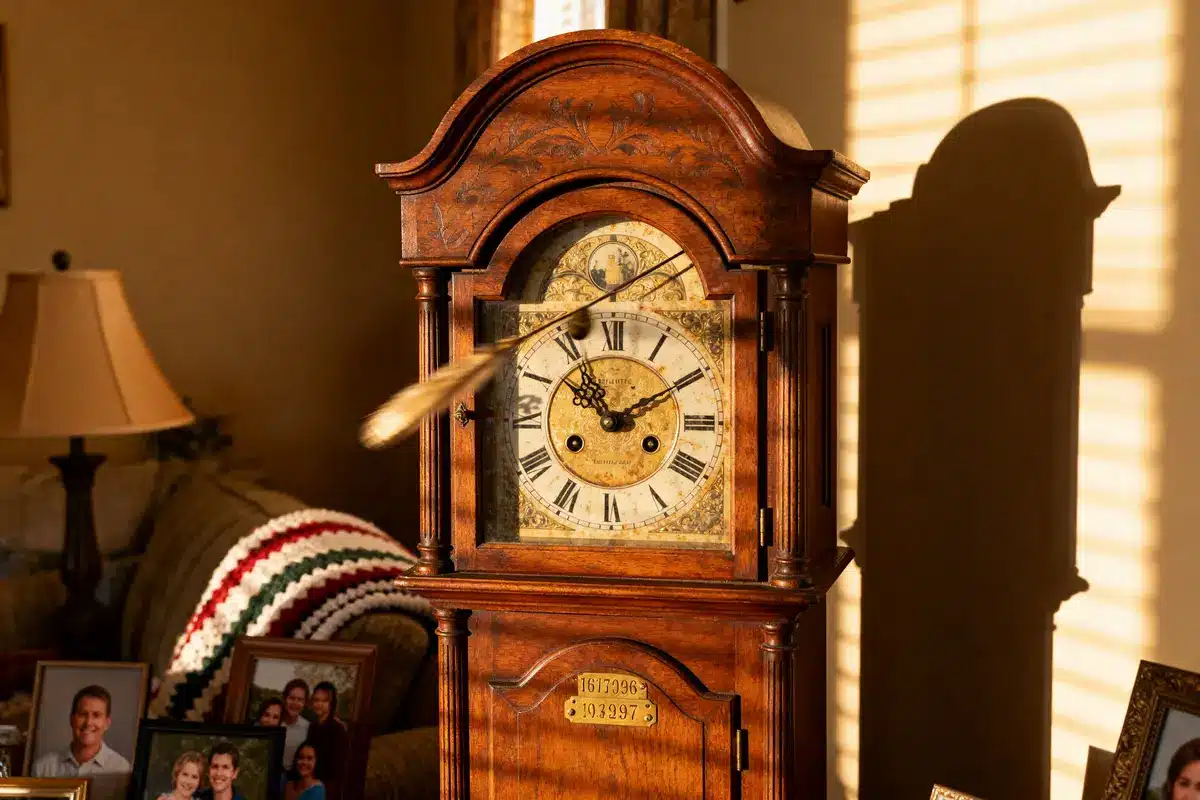
Identifying your tempus fugit grandmother clock model and year starts with knowing the basic markers often found on the clock. These clocks typically carry manufacturing details that help trace their origin. The phrase “Tempus Fugit” (Latin for “time flies”) commonly appears on the dial but does not specify the brand or date.
Most models date from the mid-20th century, roughly between the 1950s and 1980s. The case style, wood finish, and dial design can give clues to its era. Lower-end versions tend to lack a moon dial and have simpler cases, while more valuable pieces might have detailed craftsmanship. Knowing the model year is essential for proper restoration and value estimation.
How to Locate Numbers: Bonnet, Movement, and Back Plate
Back plate Movement Numbers: Reading for Dating
The back plate of the movement often bears stamped numbers or codes that help date the clock. These numbers are crucial for authenticating your tempus fugit grandmother clock. To locate them, you typically need to access the movement cavity in the rear. Look for a series of digits or letter-number combinations that signify the production batch or year.
The numbers follow manufacturer-specific formats. For example, a four-digit number might encode the year and month. Comparing these to known production logs helps pinpoint your model’s manufacture date, a valuable step for repair parts matching and appraisal.
Hidden Labels: Locating Serials on Movement and Case
Serial numbers are sometimes hidden inside the case or underneath the bonnet. Removing the bonnet safely is essential. A specific step-by-step method includes gently unscrewing or sliding the bonnet while avoiding damage to delicate finials or decorative parts. Beginners often skip this careful process, risking breakage.
Inspect the movement itself because many manufacturers stamp serial or model numbers on the metal components. Labels may also be glued behind the clock’s back panel or at the base inside the case. These hidden numbers often confirm the movement type, critical for authenticity and repair.
Tempus Fugit-Style Dating Clues from Dial and Case
The dial and case provide important dating clues beyond serials. If the dial reads “Tempus Fugit” without a brand name, the clock is likely a promotional or mass-produced model from mid-20th century America. The typeface on the dial, layout, and presence of moon phase indicators can narrow down the decade.
The case style, such as the wood finish, mica panels, or etched glass, reflects design trends of the clock’s era. For example, rounded edges and certain veneer patterns suggest a 1960s or 1970s production. These details combined with serial and movement information enable a well-rounded identification.
Tempus Fugit Grandmother Clock: Dial Text, Branding Myths, and Value
The phrase “Tempus Fugit” has caused many to mistakenly believe it marks a specific brand or high value. In reality, it is a decorative Latin motto meaning “time flies” and commonly appears on many clocks, especially those made in the 1950s through 1980s. It is not a brand name or unique identifier.
Many inexpensive or promotional clocks bear this inscription along with generic numbers without any further brand markings. Quality clocks usually have a reputable maker’s logo or name printed on or near the dial center. Value depends more on the maker, movement type, and condition rather than this phrase alone.
Chime Mechanisms: Rod vs Spring and How to Tell
Two main chime mechanisms appear in tempus fugit grandmother clocks: rod chimes and spring-driven barrel chimes. Rod chimes use long metal rods that vibrate when struck by hammers, creating a mellow sound. Spring chimes rely on wound springs activating a series of gongs or hammers.
To tell which system your clock has, open the case and examine the chime assembly near the movement. Rod chimes are usually visible as vertical metal tubes or rods. Spring chimes look more like coiled springs attached to a metal plate. Rod chimes are often associated with longer-lasting tonal quality, while spring chimes sometimes wear out faster.
Author’s Note
“Regular inspection of your clock’s movement and chime mechanism can prevent costly failures by catching early wear signs that often go unnoticed.”
Repair Steps: Overhaul Timing and Chime Fixes
Signs a Movement Needs Overhaul
Most tempus fugit grandmother clock movements run well for about 7 to 10 years before needing an overhaul due to lubrication breakdown, wear, or dirt buildup. Common signs include irregular ticking, stopping before completion of the cycle, or chimes that fail.
Other indicators include the chime mechanism working erratically or the pendulum swinging oddly. Timely movement overhaul restores smooth operation and extends the clock’s life significantly.
Chime Silencing Fixes and Regulator Basics
If the chimes silence unexpectedly, it may be due to disconnected silencing strings or wear in the dampening components. Usually, the silencing feature operates via a lever or knob that activates or suspends the chiming sequence.
Basic regulator adjustments involve tweaking the pendulum length to speed up or slow down the clock, restoring accurate timekeeping. Minor chime tuning can be done by adjusting hammer strikes on rods or springs to correct volume and tone.
Value and Maintenance: Restoration Costs and Resale Tips
Restoring a tempus fugit grandmother clock requires budgeting for parts and labor. Common repair parts such as bushings, suspension springs, or chime rods range from $20 to $150, while full movement replacements can cost between $200 and $500. Labor for a complete overhaul varies by region but typically runs $150 to $350.
To maximize resale value, focus on cleaning, correcting timekeeping, and restoring the chime mechanism fully. Original cases and components increase value. Minor cosmetic flaws are less critical, but functional restoration is key.
When selling, highlight the clock’s movement condition, chime type, and any original documentation or manuals. Clocks with known provenance or dating information fetch better prices. Many buyers seek affordable classic timepieces, making well-maintained models good investments.
🧮 Tempus Fugit Grandmother Clock Overhaul Cost Estimator
Estimate your restoration budget based on parts and labor.
FAQ: tempus fugit grandmother clock
How much is the Tempus Fugit grandmother clock worth?
The Tempus Fugit grandmother clock’s worth depends on the maker, movement type, and condition. The phrase “Tempus Fugit” alone doesn’t increase value. Well-maintained clocks with original parts and clear provenance generally fetch higher resale prices.
Are grandmother clocks worth anything?
Grandmother clocks can be worth money, especially if they have quality movements, reputable makers, and are in good condition. Value varies widely based on craftsmanship, age, and working condition. Functional and original models often attract collectors and buyers.
How old are Tempus Fugit grandfather clocks?
Tempus Fugit grandfather clocks generally date from the mid-20th century, about the 1950s to 1980s. Design features like case style, dial type, and movement numbers help identify their specific decade of production.
Is Tempus Fugit a good grandfather clock?
Tempus Fugit is not a brand but a decorative Latin phrase meaning “time flies.” These clocks vary in quality. Good grandfather clocks bear reputable maker logos and have quality movements, while some Tempus Fugit clocks are more basic and mass-produced.
How to locate the serial numbers on a Tempus Fugit grandmother clock?
Serial numbers on a Tempus Fugit grandmother clock are typically found on the movement’s back plate, inside the case, or under the bonnet. Carefully removing the bonnet and inspecting metal parts or glued labels helps reveal the numbers needed for dating and authenticity.
What chime mechanisms are used in Tempus Fugit grandmother clocks and how can you tell?
Tempus Fugit grandmother clocks use either rod chimes or spring-driven chimes. Rod chimes have visible vertical metal rods, while spring chimes include coiled springs on a metal plate. Opening the case to examine the chime assembly can identify the mechanism type.

Damian is an inquisitive writer with a passion for exploring diverse subjects. He loves sharing fresh perspectives, inspiring curiosity, and sparking meaningful conversations. For him, every topic is an opportunity to learn, connect, and uncover new ideas.