
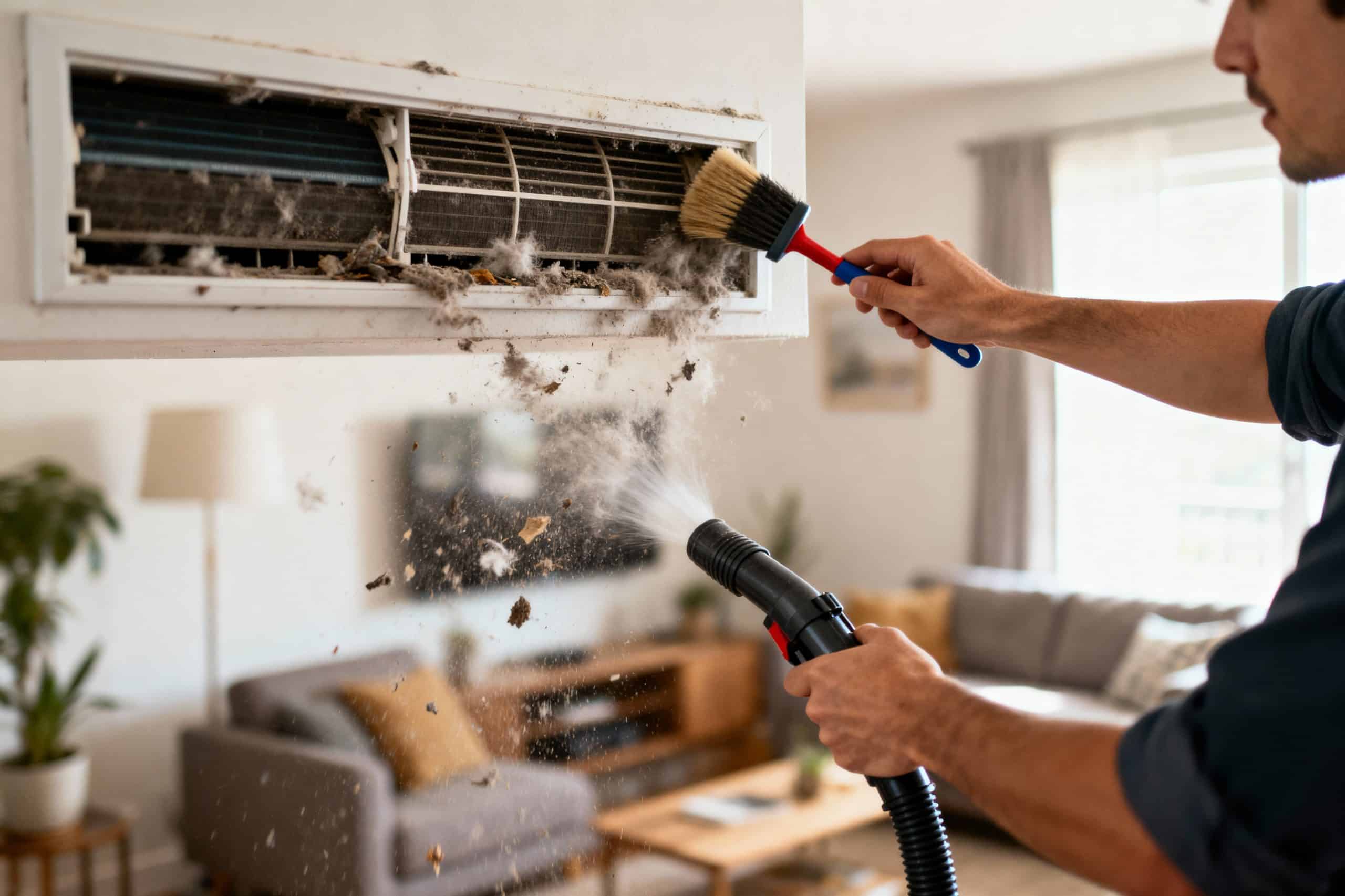
Your home’s air quality depends on a clean ventilation system, but you don’t need harsh chemicals or expensive professional services to achieve fresh, healthy indoor air. This comprehensive guide reveals how to clean a home ventilation system naturally using simple tools and safe techniques that protect both your family and your equipment, while saving hundreds of dollars in maintenance costs and improving energy efficiency by up to 15%.
What are the best methods to clean a home ventilation system?
Learning how to clean a home ventilation system properly involves using the right techniques to remove dust, debris, and contaminants that accumulate over time. The most effective approach combines multiple cleaning methods to address different components of your system.
A HEPA filter vacuum cleaner stands out as your primary weapon against dust and debris. This powerful tool removes particles from vents and accessible duct surfaces with remarkable efficiency. We recommend using the vacuum’s extension hose to reach deeper into duct openings where dust loves to hide.
For deeper cleaning, coil cleaners like EC3 HVAC Coil Cleaner work wonders on evaporator and condenser coils. These specialized products dissolve stubborn buildup that regular cleaning can’t handle. Simply spray the cleaner according to manufacturer instructions and watch years of grime disappear.
Sometimes the simplest methods prove most effective. A damp cloth or soft brush easily wipes down vent covers and grills, removing surface dirt and improving airflow. This basic technique costs almost nothing but delivers noticeable results.
Compressed air or a leaf blower can blast out dust from duct openings when used carefully. Make sure your system is completely shut off and properly sealed before attempting this method. The force of the air pushes debris out that vacuum cleaners might miss.
Creating your own cleaning solution using water and a small amount of dish soap offers a budget-friendly alternative for accessible duct components. This gentle mixture removes dirt without damaging delicate ductwork materials.
How to clean a home ventilation system in simple steps
Cleaning your ventilation system doesn’t require professional expertise, but it does demand attention to detail and the right approach. Breaking down the process into manageable steps makes the job less overwhelming and more effective.
Essential tools for cleaning the ventilation system
Success starts with having the right equipment at your disposal. Professional-quality tools make the difference between a thorough cleaning and a surface-level attempt that leaves problems unresolved.
- HEPA-filter vacuum with extension hose attachment for reaching deep into ducts
- Soft-bristled brushes and microfiber cloths for gentle yet effective cleaning
- Coil cleaning spray or foam designed specifically for HVAC systems
- Screwdriver or drill for safely removing vent covers
- Compressed air or leaf blower for dislodging stubborn debris
- Replacement filters with MERV 13 rating or higher for superior filtration
- Protective gloves and mask to shield yourself from dust and allergens
Investing in quality tools saves time and produces better results. Cheap brushes can damage ductwork, while inadequate vacuums leave debris behind that will quickly reaccumulate.
Step-by-step guide to cleaning your home ventilation system
The cleaning process follows a logical sequence that ensures safety while maximizing effectiveness. Skipping steps or working out of order can create problems or reduce the quality of your results.
Start by shutting off power to your HVAC system completely. This safety measure protects both you and your equipment from potential damage during cleaning. Never attempt to clean an active system.
Remove vent covers carefully, noting their original positions for easy reassembly. Wash these covers thoroughly with warm, soapy water, scrubbing away accumulated dust and grime. Stubborn buildup may require soaking for 15-20 minutes before scrubbing.
Vacuum duct openings and all accessible sections using your HEPA-filter vacuum. The extension hose reaches surprisingly far into ducts, pulling out debris that has accumulated over months or years.
Apply coil cleaner to evaporator or condenser coils following the product’s specific instructions. These components often harbor the most persistent dirt and require specialized cleaning products for optimal results.
Use brushes or damp cloths to tackle stubborn grime on visible duct surfaces. Gentle pressure prevents damage while still removing accumulated contaminants that affect air quality.
Clean or replace air filters based on their condition. Filters older than three months typically need replacement, while newer ones might just need a gentle rinse.
Reassemble everything carefully, ensuring vent covers fit securely and all connections are tight. A loose cover can create air leaks that reduce system efficiency by up to 20%.
Common mistakes to avoid when cleaning ventilation systems
Even well-intentioned cleaning efforts can backfire when common mistakes creep into the process. These errors not only waste time but can actually make air quality problems worse or damage your system.
Using excessive water ranks among the most dangerous mistakes homeowners make. Moisture in ductwork creates perfect conditions for mold growth, turning a cleaning session into a major health hazard. Always use damp cloths rather than soaking wet ones.
Forgetting to turn off system power before cleaning puts both you and your equipment at risk. Moving parts can cause injury, while electrical components don’t mix well with cleaning products or moisture.
Neglecting filter replacement defeats much of your cleaning efforts. Dirty filters immediately recontaminate your freshly cleaned ducts, making your hard work pointless. Professional HVAC technicians recommend filter changes every 1-3 months.
Harsh chemicals and abrasive tools can permanently damage ductwork materials. Metal ducts scratch easily, while flexible ducts can tear under excessive pressure. Gentle cleaning methods protect your investment while still achieving excellent results.
Failing to properly seal vent covers after cleaning allows conditioned air to escape, reducing system efficiency and increasing energy costs. Double-check all connections before restarting your system.
The importance of regular ventilation system maintenance
Regular maintenance transforms your ventilation system from a neglected component into a powerful ally for indoor air quality and energy efficiency. The benefits compound over time, making consistent care far more valuable than occasional deep cleaning.
Clean systems reduce indoor air pollutants dramatically, creating a healthier environment for your family. Dust, allergens, and other contaminants that would normally circulate throughout your home get trapped and removed instead.
Energy efficiency improves significantly when airflow isn’t restricted by debris and buildup. A well-maintained system can reduce energy bills by 15% compared to a neglected one, making maintenance practically pay for itself.
Component lifespan extends substantially with regular care. Motors don’t work as hard, filters last longer, and expensive parts avoid premature failure. We advise professional cleaning every 3-5 years for optimal performance.
Preventing mold and bacterial growth protects both your home and your health. These microorganisms thrive in dirty, humid ductwork but struggle to establish themselves in clean, well-maintained systems.
Signs that your ventilation system needs cleaning
Your ventilation system communicates its cleaning needs through various warning signs that become obvious once you know what to look for. Recognizing these signals early prevents minor issues from becoming major problems.
Persistent musty or moldy odors coming from vents indicate biological growth somewhere in your ductwork. These smells often intensify when the system first starts up after being off for several hours.
Visible dust, debris, or dark staining around air vents reveals the contamination level inside your ducts. If you can see the problem from the outside, imagine what’s hiding deeper in the system.
Decreased airflow or uneven heating and cooling suggests blockages or restrictions within your ductwork. Some rooms may feel stuffy while others remain comfortable, indicating distribution problems.
Higher-than-normal energy bills often reflect a struggling system working harder to move air through dirty ducts and around clogged filters. Monthly utility costs can increase by 25% when systems become severely contaminated.
Worsening allergies or respiratory symptoms indoors, especially when they improve outdoors, point directly to indoor air quality issues. Your ventilation system should improve air quality, not make it worse.
Benefits of a clean home ventilation system
A properly maintained ventilation system delivers benefits that extend far beyond simple air movement. These advantages affect your health, comfort, finances, and overall quality of life in measurable ways.
Improved indoor air quality tops the list of benefits, with clean systems removing up to 99% of airborne particles when equipped with high-quality filters. Allergens, dust, and other irritants get captured before they can circulate through your living spaces.
Enhanced HVAC efficiency translates directly into lower energy costs and more consistent comfort throughout your home. Clean systems move air more easily, reducing the workload on motors and other components.
Reduced allergy and asthma symptoms create a more comfortable living environment for sensitive family members. Many homeowners notice dramatic improvements in breathing and sleep quality after thorough system cleaning.
Fewer repair needs and extended system lifespan protect your investment while reducing unexpected expenses. Clean systems experience component failures far less frequently than neglected ones.
Better overall comfort comes from improved air circulation and more consistent temperatures throughout your home. Hot spots and cold zones become less common when air moves freely through clean ductwork.
We strongly recommend following DIY methods cautiously, emphasizing safety and proper tool use for all cleaning activities. For deep cleaning or hard-to-reach areas, consulting professional services ensures thorough results without risking damage to your valuable how to clean a home ventilation system components.
FAQ
Are you supposed to clean air vents in a house?
Cleaning air vents in a house is recommended to maintain good indoor air quality and system efficiency. Regular cleaning prevents dust buildup, improves airflow, and helps reduce allergens in your home, making it a valuable maintenance task for any homeowner.
Can I spray Lysol in my home AC vents?
Spraying Lysol in home AC vents is not advisable as it may not effectively reach all areas within the duct system and can leave residue. Instead, opt for proper cleaning methods and disinfectants specifically designed for HVAC systems to ensure thorough sanitation without potential damage.
Can I clean my home air ducts myself?
Cleaning home air ducts yourself is possible but requires care and the right tools, such as a HEPA-filter vacuum and soft brushes. Proper preparation, including turning off the HVAC system and wearing protective gear, can ensure an effective cleaning process while maintaining safety.
How to clean a ventilation system in a house?
Cleaning a ventilation system in a house involves several steps: turn off the HVAC system, remove vent covers, vacuum ducts, clean coils if necessary, and replace or clean filters. Following a methodical approach helps ensure thorough cleaning and optimal system performance.
How often should I clean my home ventilation system?
Cleaning your home ventilation system should ideally be done every 3 to 5 years, depending on usage and air quality. However, you might need to clean it more frequently if you notice dust buildup, decreased airflow, or respiratory issues among family members.
What are the benefits of cleaning my ventilation system?
Cleaning your ventilation system offers various benefits including improved indoor air quality, reduced allergens, enhanced HVAC efficiency, lower energy bills, and an extended lifespan of your HVAC system components. Regular cleaning results in a healthier and more comfortable living environment.

Damian is an inquisitive writer with a passion for exploring diverse subjects. He loves sharing fresh perspectives, inspiring curiosity, and sparking meaningful conversations. For him, every topic is an opportunity to learn, connect, and uncover new ideas.