Key takeaways:
The mid century wall unit revolutionized storage design by introducing modular bays typically sized between 19 and 25 inches wide, enabling flexible room customization. Pioneers like Poul Cadovius emphasized adjustable shelving systems that support up to 25 pounds per linear foot on teak wood shelves. Authentic pieces feature key materials such as teak, walnut, and rosewood, combining functional art with durable craftsmanship.
Have you encountered limited space yet crave stylish mid-century storage furniture? Wall storage solutions like adjustable desks and cabinets adapt easily to varied room dimensions thanks to their modular construction and load-bearing considerations. Understanding concepts such as modular bay widths and the role of key materials is vital for designing both functional and elegant interiors. With knowledge of customizable bays and shelf capacities, you can plan a versatile unit that maximizes space while reflecting iconic design heritage.
Iconic Makers and How They Shaped Wall Units
The mid century wall unit gained its legendary status largely thanks to pioneering designers who transformed storage furniture into functional art. Figures like Poul Cadovius, George Nelson, and Nils Strinning revolutionized the concept of wall units by introducing modularity and sleek Scandinavian aesthetics. Their creative use of space and innovative joinery techniques set the foundation for versatile designs. These makers emphasized flexibility, allowing users to customize shelves, cabinets, and desks to fit any room size. This approach made the wall unit not just storage, but a statement of mid-century modern style.
American makers such as Broyhill and Drexel contributed iconic walnut and teak units, blending traditional materials with modern design lines. European contemporaries explored combinations of wood and metal, enhancing durability and visual appeal. By balancing form and function, these makers ensured the wall unit was both stylish and practical, shaping the way storage furniture was viewed today.
Cadovius/Cado System: Basics (mid century wall unit)
Understanding Modular Bays and Shelves
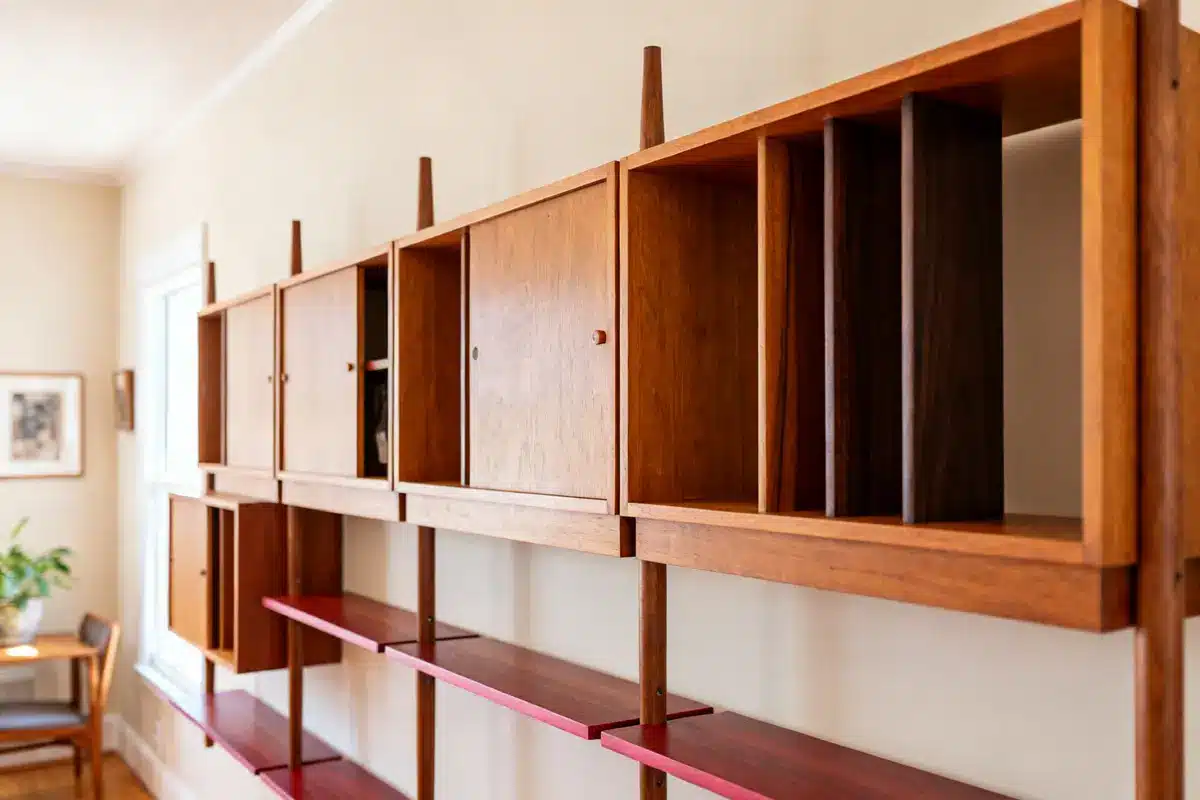
The key to the Cadovius/Cado System’s enduring popularity is its modularity. The wall units are built from separate bays that can be combined to fit a room’s specific dimensions. Standard bay widths typically range from 19 to 25 inches, while heights usually come in modular increments like 28 or 42 inches, aiding in custom planning. This flexibility means you can add or subtract bays without compromising the unit’s structural integrity.
Each bay holds adjustable shelves and compartments, allowing personalization of storage and display. The shelving system is designed to distribute weight evenly, but when planning installation, it’s important to consider load-bearing capacity per shelf, especially in vintage teak units where heavy books or decor might cause sagging or damage over time.
Finishes: Teak, Walnut, Rosewood
The choice of wood finish strongly influences both the look and durability of Cadovius units. Teak is the classic favorite due to its warm golden hues and natural oils that resist moisture and decay. Walnut offers a richer, darker tone with elegant grain patterns, often favored in American mid-century pieces for its depth and sophistication. Rosewood, prized for its deep reddish-brown color and striking grain, was used less frequently but remains highly sought after by collectors.
The finishes are typically left natural or matte to highlight wood texture while maintaining a subtle mid-century appearance. Over time, these finishes develop a patina that adds charm but also calls for delicate cleaning to avoid stripping essential surface oils.
Integrating Desks, Cabinets, and Lighting
One hallmark of the Cadovius/Cado system is how it blends various furniture functions seamlessly. Desks can be integrated within bays, offering a compact workspace with drop-down fronts or pull-out surfaces. Cabinets with sliding or tambour doors add concealed storage, preserving a clean line, while open shelving displays books and curios.
Built-in lighting features are another smart addition to these units, usually installed beneath shelves or inside cabinets to accentuate displayed items. These details not only enhance usability but also reinforce the elegant modernist vibe of a mid century wall unit.
Author’s Note
“When planning your Cadovius system layout, pay close attention to bay widths and shelf heights to ensure authentic fit and maintain vintage value.”
Layout Planning for a Wall Unit (mid century wall unit)
Measuring Space and Choosing Proportions
Before buying or assembling a mid century wall unit, precise measurement of your available space is crucial. Measure wall width, height, and any architectural elements like outlets or vents that could impact installation. A well-planned unit fits perfectly without overwhelming the room.
Choosing proportions involves balancing tall and low bays to break monotony while maximizing storage. Keep in mind the load-bearing capacity of vintage shelves: teak shelves usually support about 20 to 25 pounds per linear foot. Knowing this helps prevent damage from overloading and ensures longevity.
Layout Patterns: Linear, Corner, and Split
There are three main layout patterns for mid century wall units:
- Linear layout: Bays arranged side by side in a straight line, ideal for large walls and streamlined looks.
- Corner layout: Designed to fit snugly into room corners, maximizing otherwise unused space; requires precise fitting due to bay angles.
- Split layout: Units divided into separate sections across walls or floating with space in between, creating room flow and visual interest.
These patterns can be combined for highly personalized solutions depending on room shape and function.
Care, Restoration, and Longevity of Vintage Wall Units
To preserve a vintage mid century wall unit, gentle routine care is essential. Dust units regularly with a dry microfiber cloth to avoid surface scratches. For deeper cleaning, use a damp cloth with mild soap, avoiding harsh chemicals that can damage wood finishes.
Restoration often involves light sanding and applying teak oil or specialized waxes to rejuvenate color and protect wood fibers. Pay special attention to joints and screw fittings to tighten loose parts without altering original hardware. Minor veneer chips are best repaired with matching wood fillers or touch-up markers designed for teak, walnut, or rosewood finishes.
Properly maintained, these units can last decades, becoming heirloom pieces showcasing timeless mid-century craftsmanship.
Storage Meets Display: Shelving, Desks, and Cabinets
The genius of mid century wall units lies in their dual role as both storage and display furniture. Adjustable shelves provide open-air space to showcase books, art, or collectibles, while cabinets and drawers keep clutter hidden. Desks embedded within the system create small but functional work areas.
Many wall units feature sliding doors or tambour panels, perfect for quickly concealing workspaces or media equipment. This balance keeps living areas organized without sacrificing style. Incorporating varying shelf depths and heights further enhances how you showcase objects and store essentials.
Buying Tips: Authenticity, Pricing, and Shops
When shopping for a mid century wall unit, prioritizing authenticity ensures you get craftsmanship and value. Look for maker’s marks, labels, or stamps from renowned designers like Cadovius, Broyhill, or FM Møbler. Authentic pieces often feature dovetail joints, solid wood (not veneer-only), and modular bay constructions.
Pricing varies depending on condition, maker, and configuration. Current average resale prices for common mid-century wall units are:
- Basic teak shelving bays: $700 to $1,500 each
- Complete Cadovius/Cado systems (3 to 5 bays): $3,000 to $8,000
- Rare rosewood or walnut units with integrated desks: $4,000 to $10,000+
Trusted venues include vintage furniture shops, estate sales, and specialized online marketplaces. Always verify condition and authenticity with sellers and request detailed photos before purchasing.
🧮 Mid Century Wall Unit Space & Load Calculator
Estimate the best layout size and shelf load capacity for your wall unit project.
FAQ: mid century wall unit
What is a mid century wall unit and why is it popular?
A mid century wall unit is modular storage furniture from the mid-20th century known for combining function and art. Its popularity stems from sleek Scandinavian design, flexibility, and the use of quality materials like teak and walnut, making it both stylish and practical for modern homes.
Who were the iconic makers of mid century wall units?
Iconic makers such as Poul Cadovius, George Nelson, and Nils Strinning shaped mid century wall units with modular designs. American brands like Broyhill and Drexel contributed walnut and teak pieces, while European makers blended wood and metal, balancing aesthetic and durability in these units.
How do modular bays and shelves work in a Cadovius/Cado System wall unit?
Modular bays in a Cadovius/Cado System are separate units 19 to 25 inches wide, stacked in heights like 28 or 42 inches, allowing flexible layouts. Each bay has adjustable shelves and compartments that let you customize storage while maintaining structural integrity.
What wood finishes are commonly used in mid century wall units?
Common wood finishes in mid century wall units include teak for its natural oils and warmth, walnut for rich darker tones, and rosewood for its deep reddish-brown grain. These finishes are usually natural or matte to highlight wood texture and develop a patina over time.
How should I plan the layout for a mid century wall unit installation?
Planning a mid century wall unit layout requires measuring the wall’s width and height, noting architectural elements, and balancing bay sizes. You can choose linear, corner, or split patterns to maximize space and style while considering shelf load limits to avoid damage.
What care and restoration tips help preserve vintage mid century wall units?
To preserve vintage mid century wall units, dust regularly with a dry cloth and clean gently with mild soap. Restoration may include light sanding and applying teak oil or waxes, tightening fittings, and repairing veneer chips with matching fillers to maintain their original charm.

Damian is an inquisitive writer with a passion for exploring diverse subjects. He loves sharing fresh perspectives, inspiring curiosity, and sparking meaningful conversations. For him, every topic is an opportunity to learn, connect, and uncover new ideas.