Key takeaways:
The vintage pig cookie jar market hinges on identifying authentic marks from makers like Shawnee, McCoy, and Hull, whose production peaked between the 1930s and 1950s. Condition severely impacts value, with chips reducing prices by up to 25%, and rarity can elevate prices to several hundred dollars. Glaze types, lid styles, and pig poses further assist collectors in determining origin and authenticity.
How can you be sure your vintage pig cookie jars are truly valuable and not reproductions? Many collectors struggle with spotting subtle glaze differences and maker-specific lid designs that reveal authentic versus modern pieces. The stakes are high as accurate dating depends on reading signatures and manufacturing quirks while weighing condition and rarity. Understanding these elements gives you a reliable framework to assess, authenticate, and price your jars with confidence in today’s market.
Identifying the Vintage Pig Cookie Jar: Shawnee and Peers
Authentic Marks and Signatures on Pig Cookie Jars
Identifying an authentic vintage pig cookie jar starts with examining the marks and signatures on its base. Shawnee jars often carry the distinctive “Shawnee” mark, sometimes paired with a green or red ink stamp. McCoy jars typically display the “McCoy” logo imprinted or etched deeply into the clay. Hull pottery’s marks are subtler, often a simple “Hull” stamp or cursive embossing. Collectors rely heavily on these authentic marks as a reliable way to differentiate original pieces from reproductions.
Experienced collectors note that glaze types can also hint at a maker: Shawnee tends to use a shiny, smooth glaze often with brighter colors, while McCoy’s finish leans toward matte or semi-gloss with earthy tones. This nuanced comparison helps when the marks are worn or unclear.
Inspecting the underside carefully for signature style and glaze texture can be a practical first step and is rarely overlooked in serious vintage pig cookie jar collecting.
Common Lid Styles and Pig Poses
Vintage pig cookie jars come with various lid styles, which is key to identifying and dating the piece. Shawnee jars often feature removable lids shaped as the pig’s head or a separate hat atop the pig, creating a hollow space for cookies. McCoy’s lids might be heavier and integrate more with the jar’s overall body, whereas Hull’s lids often have a snug fit with minimal separation lines.
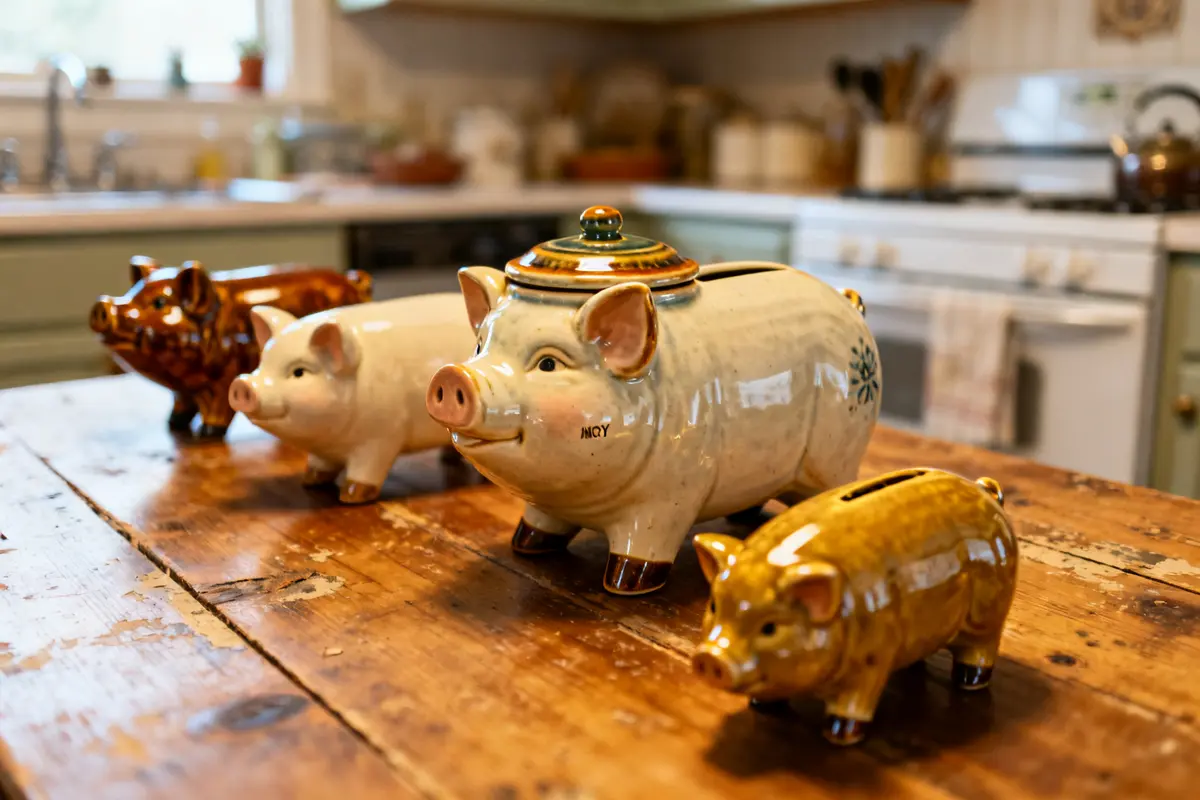
As for pig poses, common styles include standing pigs with raised snouts, sitting pigs, or playful crouching stances. Some Shawnee examples showcase “smiley” pig expressions popular in the 1940s. These poses are more than decoration – they reveal the artistic tendencies of the maker and timeframe.
Key Makers to Know: Shawnee, McCoy, Hull
Shawnee, McCoy, and Hull are the pillars of vintage pig cookie jar production. Shawnee produced whimsical, brightly glazed designs mostly from the 1940s to 1950s, often marked by their trademark smiling pigs. McCoy’s jars are famous for their sturdiness and muted colors, peaking in production between the 1930s and 1970s. Hull pottery, while less pig-focused, created fewer but highly collectible jars with subtle detailing and minimalist markings.
Knowing these makers helps filter dozens of similar pieces in the marketplace. Few guides emphasize the practical use of glaze analysis between Shawnee’s vibrant shine and McCoy’s matte finishes to tell jars apart, an edge that serious collectors find invaluable.
How to Date and Authenticate a Pig Cookie Jar
Dating a vintage pig cookie jar means looking beyond just the style – the glaze, signatures, and manufacturing quirks are big indicators. For example, jars with a pronounced glossy glaze and brightly colored paint likely date from the 1940s to 1950s, especially from Shawnee. Older jars may have crazing and patina, a network of fine cracks from age, which helps confirm authenticity.
Authentication includes checking the weight; genuine vintage jars tend to feel solid and well-made compared to modern replicas, which may feel lighter due to cheaper materials. Attention to the type of clay used and marks on the bottom is also key.
Some jars have rare variations or production errors, such as misaligned lids or color differences, that can assist in pinpointing specific years or limited runs. Using several clues together sharpens dating accuracy for the vintage pig cookie jar.
Author's Note
"Focus on subtle glazing differences and weight to avoid costly mistakes when authenticating vintage pig cookie jars."
Valuing the Vintage Pig Cookie Jar: Price Ranges and Factors
Condition and Chips Impact on Pig Cookie Jar Value
Condition is a huge driver of value in vintage pig cookie jars. Even small chips can reduce the price, often by around 15% to 25%, while cracks or repairs can dent value by up to half or more. Collectors prize jars with pristine glaze and no damage.
Wear consistent with age, like some crazing, can sometimes add charm but serious chips or broken lids will lower desirability. Provenance also factors into value, especially if the jar had a prominent previous owner or came from a noteworthy collection.
Rarity, Provenance, and Market Demand for Pig Jars
Rarity is another key factor affecting price. Some Shawnee smiley pig designs are relatively common, while limited production runs or unusual colorways fetch top prices. Provenance increases appeal, especially if documented. Market demand fluctuates too, depending on collector interest and pop culture trends around vintage kitchenware collectibles.
Rare jars from Hull or early McCoy examples can command up to several hundred dollars, while more common pieces often fall between $50 and $150. The market rewards well-preserved, truly vintage examples.
Where to Sell: Auction Sites and Platforms
Popular venues to sell vintage pig cookie jars include online auction sites like eBay and Etsy, which connect global buyers and allow for competitive bidding. Specialized vintage pottery forums or collector groups can also be great for private sales and trades. Local antique shops and vintage fairs remain solid options, often yielding quicker sales with less effort.
Using multiple sales channels generally produces the best results. Sellers should note that listing with clear photos emphasizing condition and markings drives higher final prices.
Care, Preservation, and Display Tips
To keep your vintage pig cookie jar in top shape, avoid placing it in direct sunlight, which can fade its glaze. Dust regularly using a soft brush, and clean gently with a damp cloth. Do not immerse the jar fully in water to prevent damage to any unglazed parts or the interior.
It’s best to store these jars in a stable environment with moderate temperatures, avoiding extreme heat or humidity that may cause glaze crazing or clay expansion. For displaying, consider a secure shelf with good lighting that highlights the colors but minimizes direct sun.
Displaying your vintage pig cookie jar alongside complementary kitchen collectibles also enhances its overall appeal and protects it from accidental knocks.
Top Models and Notable Makers to Watch
Some of the most sought-after models in pig cookie jars include Shawnee’s “Smiley Pig,” noted for its cheerful expression, and McCoy’s standing pig with a removable hat lid. Hull’s less common models have unique minimalist charm but are often harder to find.
Collectors should watch for rare glaze colors, limited edition runs, and signed pieces, which can spike interest and value in auction environments. Knowledge of model variations also helps spot valuable jars before buying or reselling.
Acquiring Tips: Avoiding Fakes and Getting Great Deals
Spotting fakes requires a good eye. Pay close attention to lid fit and weight. Modern reproductions often show poorly fitting lids, odd or plastic-feeling materials, and incorrect weights that are lighter than their vintage counterparts.
Look for imperfections consistent with handcrafting such as uneven glaze lines or minor asymmetry. Authentic vintage pig cookie jars tend to have glazing quirks that reproductions lack.
When hunting for bargains, shop at estate sales and thrift shops where sellers might not know the value. Use knowledge of authentic marks and glaze types to negotiate confidently.
🧮 Vintage Pig Cookie Jar Value Estimator
Estimate the value of your vintage pig cookie jar based on maker, condition, and rarity.
Care, Preservation, and Display Tips
Proper care preserves your vintage pig cookie jar’s color and finish. Avoid harsh detergents; instead, use a soft cloth with warm water to clean dust or stains gently. Do not scrub the glaze to prevent scratches.
Displaying your jar in a cool, dry area shields it from moisture damage and fading. Avoid kitchen spots near stovetops or direct sunlight which degrade pottery over time. Using a glass cabinet for display both protects it from dust and showcases the unique charm of your piece.
Keep an eye on temperature and humidity to prevent crazing, a common issue in ceramics caused by environmental changes.
Top Models and Notable Makers to Watch
Popular models that collectors seek include the Shawnee “Smiley Pig” known for its vibrant glaze and cheerful look, McCoy’s robust standing pig with removable hats, and rare Hull minimalist styles that appeal to niche collectors. Limited edition colors or holiday-themed pigs often rise in value.
Knowing these models allows collectors to recognize opportunities early. These makers represent the golden era of mid-20th-century American pottery, and their designs often reflect cultural and artistic trends of their time.
Acquiring Tips: Avoiding Fakes and Getting Great Deals
When buying a vintage pig cookie jar, watch for common reproduction signs: lids that don’t fit flush, uneven paint, or lids made of cheaper, lighter ceramic that lacks the weight of vintage originals. Reproductions sometimes have brighter colors but lack the glaze depth found in authentic vintage pieces.
Buying from reputable sellers or verifying marks and glaze consistency is key. Estate sales and thrift shops often yield great deals, but always ask about return policies if available.
Familiarize yourself with seller photos showing underside marks and close-ups of lid fits to authenticate remotely with confidence.
FAQ: vintage pig cookie jar
How much is the Winnie Pig cookie jar worth?
The Winnie Pig cookie jar’s worth depends on condition, maker, rarity, and provenance. Well-preserved vintage pieces, especially by Shawnee or McCoy, can range from $50 to several hundred dollars, with rare or limited editions fetching the highest prices among collectors.
What is the most valuable vintage cookie jar?
The most valuable vintage cookie jars often include rare or limited edition pieces by Shawnee, McCoy, or Hull. Models like Shawnee’s “Smiley Pig” or early McCoy standing pigs with removable hats are highly prized, especially in mint condition with verified authenticity.
How to find the value of cookie jars?
Finding the value of cookie jars involves assessing maker marks, condition, rarity, and market demand. Checking for authentic signatures, glaze type, and damage helps, alongside browsing online auctions and collector forums for current sale prices of similar vintage pig cookie jars.
Do cookie jars have value?
Cookie jars have value, especially vintage ones from notable makers. Their collectible worth hinges on age, condition, rarity, and provenance. Vintage pig cookie jars by Shawnee, McCoy, or Hull often attract collectors willing to pay for authentic, well-preserved examples.
How to date and authenticate a vintage pig cookie jar?
Dating and authenticating a vintage pig cookie jar involves examining the glaze, maker’s mark, weight, and signs of aging like crazing. Shawnee jars typically have shiny, bright glazes from the 1940s-50s, while McCoy’s have matte finishes. Authentic jars feel solid and have consistent handmade features.
How to spot fake vintage pig cookie jars?
Spotting fake vintage pig cookie jars requires checking lid fit, weight, and glaze quality. Reproductions often have loose lids, lighter weight, or plastic-like finishes. Authentic vintage jars show handcraft details, glazing quirks, and proper maker marks on the base. Buying from trusted sellers helps avoid fakes.

Damian is an inquisitive writer with a passion for exploring diverse subjects. He loves sharing fresh perspectives, inspiring curiosity, and sparking meaningful conversations. For him, every topic is an opportunity to learn, connect, and uncover new ideas.