Key takeaways:
The antique coffee table market values pieces between 14 to 18 inches in height, reflecting era-specific proportions. Authenticity relates directly to identifying hand-tool craftsmanship and genuine patina aged over 50 to 150 years. Recognizing materials like walnut and mahogany alongside provenance details enhances accurate valuation and purchasing decisions.
What defines the enduring appeal of vintage coffee tables in modern homes? The subtle interplay of design styles, materials, and manufacturing techniques from different periods creates a rich narrative beyond mere furniture. Buyers encounter challenges distinguishing genuine antiques from refinished or replicated items without clear knowledge of age indicators and material qualities. Understanding these factors empowers collectors and decorators to evaluate value confidently while selecting pieces that match both aesthetic preferences and functional needs.
Antique Coffee Table Styles Across Eras
Antique coffee tables come in a variety of styles that reflect the design trends and cultural influences of their time. From Victorian elegance to Mid-Century Modern simplicity, these pieces serve as functional art in any living space.
Victorian tables often feature ornate carvings and rich dark woods, symbolizing opulence and craftsmanship from the late 19th century. Georgian styles from the 18th century showcase symmetry and classic proportions with fine detailing. Early 20th-century pieces might lean towards Art Deco with geometric patterns or rustic farmhouse designs emphasizing sturdy build and natural materials.
The evolution of these styles reveals how social habits and tastes influenced furniture design. Recognizing these distinct eras helps narrow down an antique coffee table’s origin and story, which are valuable in authentic assessments.
From Oak to Brass: Materials and Craftsmanship
Common Woods Used in Antique Tables
Wood type is central to understanding and appreciating antique coffee tables. Oak has long been prized for its robustness and visible grain, commonly used in rustic and Tudor-inspired designs. Walnut offers a rich, warm tone favored in Georgian and Victorian eras, often displaying delicate veneer work.
Mahogany is another popular hardwood known for its deep reddish-brown color and smooth finish, especially in early American and English styles. Pine and fruitwood were often used for more casual or country-style tables, prized for their availability and ease of carving.
Finishes and Patina: What to Look For
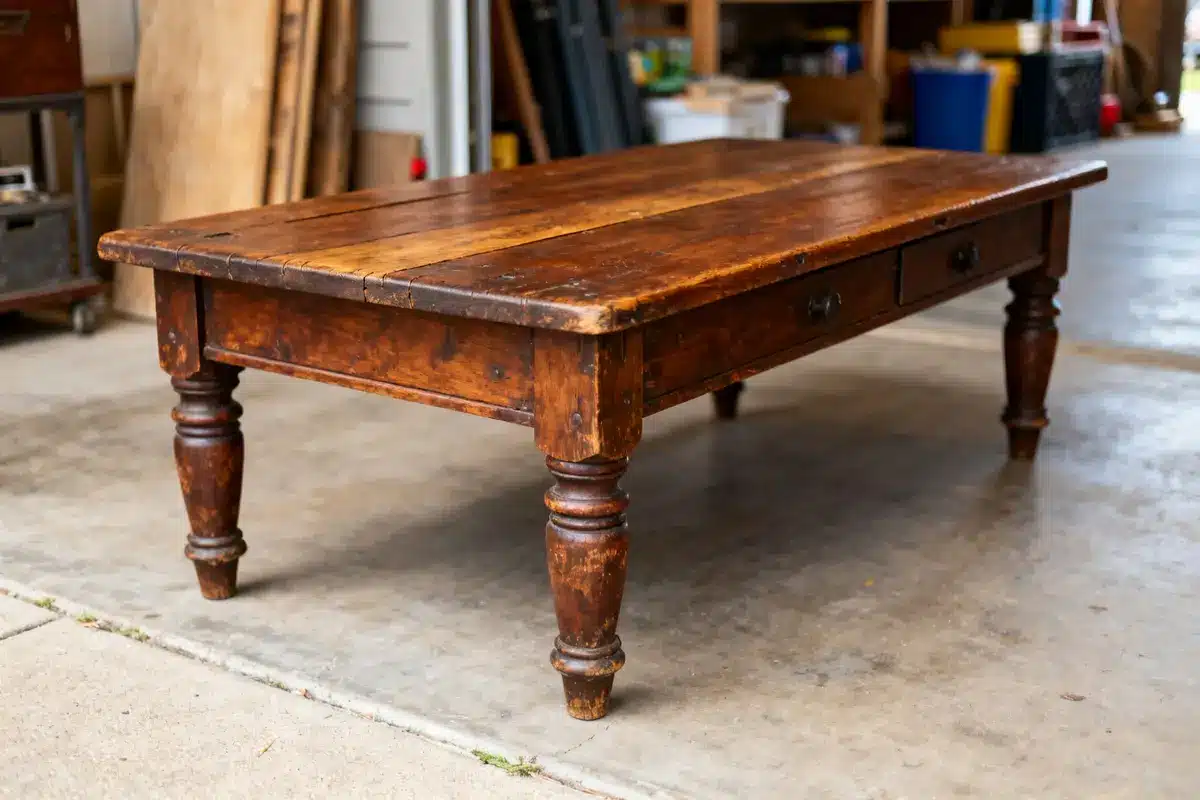
The finish on an antique coffee table reveals much about its history and authenticity. Genuine patina develops over decades—typically 50 to 150 years—adding a warm depth and subtle surface wear not easily replicated by modern techniques. Environmental factors like sunlight and humidity accelerate patina changes, softening surface colors or causing slight checks in the finish.
When examining finishes, look for signs of natural aging such as consistent color variations and gentle wear on edges and corners. Lacquer, shellac, and wax were common traditional finishes, each aging uniquely. These layers protect the wood while revealing the hand-applied craftsmanship of their period. Avoid surfaces with overly shiny or uniform finishes, which often indicate modern refinishing.
Hand-Tool Craft: Carving and Inlay Techniques
Expert hand-tool work sets apart authentic antique coffee tables. Carvings done with chisels and gouges display irregular, individual marks, showing the artisan’s skill and style. Inlay techniques use contrasting woods, brass, or mother-of-pearl to create intricate patterns, commonly found in Louis XVI and Empire tables.
Delicate marquetry and parquetry often decorate tabletops or legs, showcasing highly detailed, crafted motifs that hint at an object’s origin. Unlike machine-cut designs, these hand-tool methods provide tactile texture and depth, key indicators of quality craftmanship in antiques.
Author’s Note
“Authentic hand-tool craftsmanship combined with original patina tells the true story of an antique coffee table far better than any documentation.”
Shapes, Proportions, and How They Function
The shape and size of antique coffee tables reflect both era-specific aesthetics and practical use. Rectangular tables have been popular for displaying books and serving drinks, while round and oval shapes often encourage social interaction and flow in a room.
Historically, the height of these tables ranged from 14 to 18 inches, depending on furniture trends and sofa heights of the time. For instance, Victorian coffee tables often stood around 16 to 18 inches tall, suited to high-backed seating, while Mid-Century Modern pieces are typically lower, between 14 and 16 inches.
Typical widths range from 36 to 48 inches, with depths around 18 to 24 inches, balancing usability and space efficiency. These proportions not only enhance ergonomic comfort but also determine how a piece complements the room’s layout and scale.
How to Identify and Value a Genuine Antique Coffee Table
Identifying a genuine antique coffee table requires attention to materials, craftsmanship, and provenance. Authentic antiques show age-appropriate wear, original joinery techniques such as mortise and tenon, and hand-carved details. Look for signs of repairs or replaced parts that might affect value.
Valuation hinges on rarity, condition, and historical significance. Tables linked to particular makers or estates often fetch higher prices. Provenance documents, old sales records, or labels under the table provide added assurance of authenticity.
Where to Find Antique Coffee Table Today
Reputable Dealers and Museums
Specialized antique dealers and museum shops are excellent places to find authentic coffee tables. These sources often curate collections with documented provenance and guarantee expert restoration that respects original craftsmanship. Dealers can also offer expert advice on style, materials, and value.
Auction Houses and Online Marketplaces
Auction houses provide access to rare and notable antique coffee tables from across eras and regions. Online marketplaces offer convenience and wide variety but require careful vetting. Look for detailed descriptions, close-up photos, and seller feedback to avoid reproductions or heavily restored pieces.
Buyer Questions to Confirm Authenticity
When purchasing, ask sellers these three key questions to verify originality:
- What is the documented provenance or history of the table?
- Has the table undergone any repairs or refinishing? If so, what parts were restored?
- Are there maker’s marks, labels, or stamps that authenticate the piece?
Engaging in this dialogue lowers the risk of buying a misrepresented item and helps confirm the antique’s true value.
Practical Buying Tips: Negotiating, Shipping, and Care
Negotiation is often possible when buying antique coffee tables, especially in dealer shops or auctions. Understanding market prices and comparable sales gives buyers leverage. Inspect condition closely and factor in restoration costs when making offers.
Shipping antiques requires careful packaging to preserve delicate finishes and fragile details. Professional crating and insurance are recommended. Before shipping, document the condition thoroughly with photos.
Proper care extends the life and beauty of your antique coffee table. Avoid direct sunlight and extreme humidity changes to protect finishes and wood integrity. Use soft cloths for cleaning and apply quality wax or polish sparingly, preserving the original patina and craftsmanship.
🛍️ Antique Coffee Table Budget Calculator
Estimate your total cost including purchase price, restoration, and shipping.
FAQ: antique coffee table
How to identify a genuine vintage coffee table?
To identify a genuine vintage coffee table, examine materials, original joinery like mortise and tenon, hand-carved details, and natural patina. Look for age-appropriate wear and signs of repairs or replaced parts. Provenance or maker’s marks also confirm authenticity.
What is the 2 3 rule for coffee tables?
The 2 3 rule for coffee tables means the table should be about two-thirds the length of the sofa it accompanies and about two-thirds of the sofa’s height. This ensures balanced proportions, ergonomic comfort, and proper scale in living spaces.
How much is an antique table worth?
The worth of an antique table depends on rarity, condition, craftsmanship, provenance, and historical significance. Tables linked to renowned makers or estates typically have higher value. Documentation and original condition also influence price.
When were vintage coffee tables most popular?
Vintage coffee tables were most popular during the early to mid-20th century, especially in styles like Victorian, Georgian, Art Deco, and Mid-Century Modern, reflecting evolving social habits and design trends over time.
What are the different materials used in antique coffee tables?
The different materials used in antique coffee tables include woods like oak, walnut, mahogany, pine, and fruitwood. Finishes such as lacquer, shellac, and wax create patina. Inlays of brass and mother-of-pearl are also common in detailed craftsmanship.
How should you care for an antique coffee table?
You should care for an antique coffee table by avoiding direct sunlight and humidity changes, cleaning with soft cloths, and sparingly applying quality wax or polish. These steps help preserve the original finish, patina, and wood integrity.

Damian is an inquisitive writer with a passion for exploring diverse subjects. He loves sharing fresh perspectives, inspiring curiosity, and sparking meaningful conversations. For him, every topic is an opportunity to learn, connect, and uncover new ideas.