Key takeaways:
Learning how to clean antique bottles safely involves using specific personal protective equipment like nitrile gloves and working in a well-ventilated area to avoid exposure to toxic residues such as arsenic and mercury chloride. Essential cleaning tools include soft-bristle bottle brushes of various sizes and aquarium rocks sized about 1/8 to 1/4 inch for inside scrubbing. Protecting fragile labels with plastic wrap and rubber bands is critical to preserve original paper markings during the cleaning process.
Do you know what hidden dangers vintage glassware might hold? Antique bottles can contain unseen toxic materials and fragile surfaces that make cleaning a delicate task requiring proper PPE and carefully selected supplies. Mishandling chemicals or abrasive tools risks both personal safety and the integrity of rare collectible bottles. Knowing how to approach the cleaning with specialized tools and protective measures lets collectors maintain authenticity while minimizing damage to valuable glass and labels.
How to Clean Antique Bottles: Prep, Safety, and Tools
PPE and Hazard Considerations When Cleaning Vintage Bottles
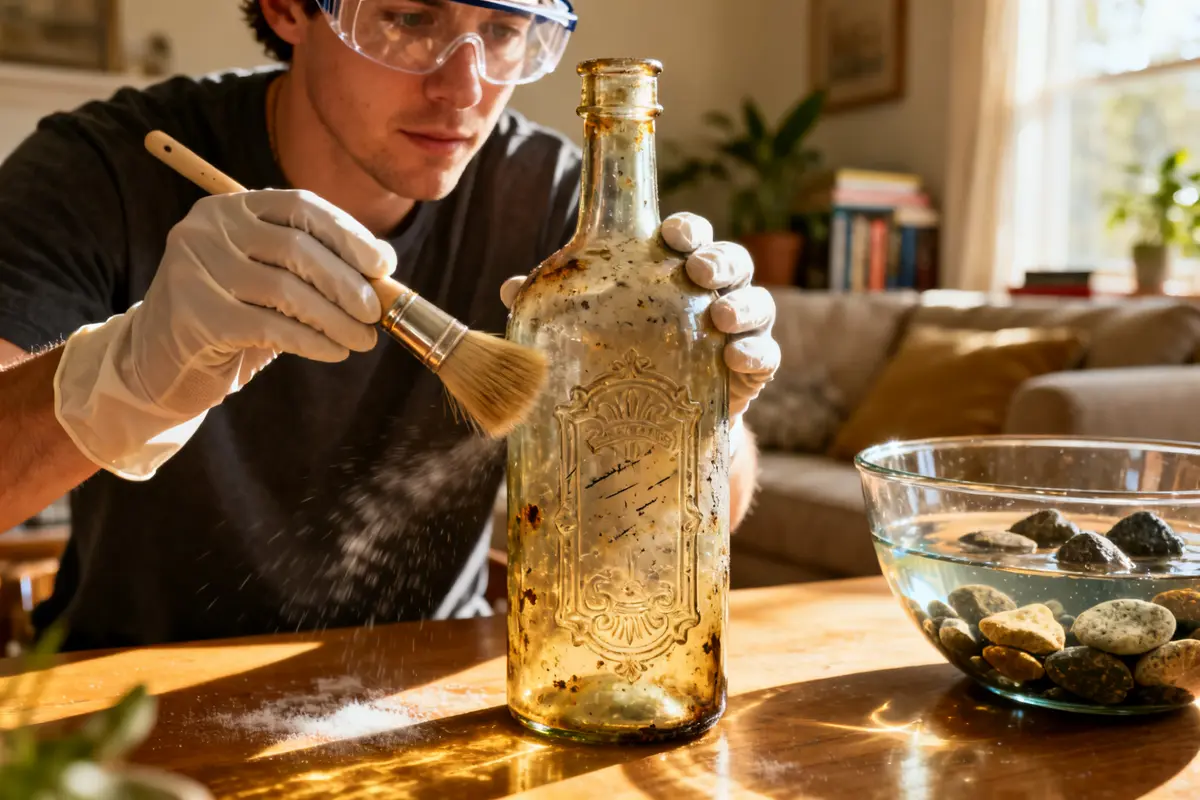
When learning how to clean antique bottles, safety must come first. Many vintage bottles may contain toxic residues or harmful remnants like mercury chloride, lead oxide, or even traces of arsenic from old medicines. Wearing proper personal protective equipment (PPE) such as nitrile gloves and a mask is critical to avoid skin contact and inhalation of dangerous dust or vapors. Use safety goggles to protect your eyes, especially when working with chemical cleaners.
Always work in a well-ventilated area, because some antique bottles might hold corrosive or poisonous substances like potassium hydroxide or hydrochloric acid. These hazards make understanding proper PPE vital for a safe cleaning process. Never underestimate the risk if you suspect hazardous materials inside your vintage glass bottles.
Must-Have Supplies for Antique Bottle Cleaning
Gathering the right tools makes cleaning antique bottles easier and more effective. Here’s a list of essential supplies you’ll need:
- Mild dish soap such as Dawn
- Soft-bristle bottle brushes with various sizes for narrow or wide openings
- Old toothbrush for intricate exterior spots
- Mr. Clean Magic Eraser or similar for stubborn stains
- Aquarium rocks sized about 1/8 to 1/4 inch diameter (see pro cleaning below)
- Plastic wrap and rubber bands for protecting labels
- Safety gloves, mask, and goggles as part of PPE
- Funnel to fill bottles for inside cleaning
Having these items on hand prepares you for different types of antique bottles, especially when dealing with narrow necks or fragile glass. Using the right tools prevents damage and preserves the bottle’s integrity throughout the cleaning.
Inside Cleaning for Narrow Openings
Cleaning the inside of antique bottles with narrow necks presents a unique challenge. Regular brushes often can’t reach all areas, leaving stubborn dirt or residue behind. To start, soak bottles in warm, soapy water to soften grime. Filling the bottle halfway and shaking vigorously helps loosen debris.
If your bottle opening is too small for hands or standard brushes, consider flexible micro-brushes or pipe cleaners designed specifically for bottle necks. For bottles holding unknown remnants, avoid submerging or shaking without PPE since residues could be volatile.
An effective tip is to fill the bottle with warm water, add some mild detergent, and swirl it vigorously with small objects inside to scrub hard-to-reach spots. Avoid harsh chemicals on narrow glass to protect delicate rims and prevent etching.
Exterior Cleaning and Stain Removal
Outside cleaning of vintage glass bottles is generally easier but still demands care. Start by rinsing with warm water and dish soap. Use a soft bottle brush or toothbrush for crevices and embossed lettering. For tough stains or mineral deposits, a Magic Eraser can remove grime without scratching the surface.
Never use abrasive pads or harsh chemical cleaners on painted or delicate glassware. Instead, work gently in circular motions. Rinse thoroughly to remove residue and dry with a soft cloth. The goal is to brighten the antique glass without damaging its patina or original manufacturing marks.
Pro Techniques for Inside Deep Cleaning
Using Aquarium Rocks to Scrub Inside
One expert tip on how to clean antique bottles is to use aquarium rocks to scrub the inside effectively. Add about one handful (roughly 1/4 cup) of small smooth aquarium pebbles sized between 1/8 and 1/4 inch diameter. Combine the rocks with a splash of warm water and a few drops of dish soap inside the bottle.
Swirl the mixture vigorously for several minutes, allowing the rocks to gently scour the inside surfaces. This method works especially well for removing stubborn deposits from glass bottles with narrow openings. After scrubbing, strain the water and rocks carefully and rinse the bottle thoroughly with clean water.
Choosing Alternative Tools for Very Narrow Necks
For bottles with extremely narrow necks or fragile glass, aquarium rocks may be too large or risky to use. Lightweight alternatives include pipe cleaners, cotton swabs with extended handles, and flexible micro bottle brushes. These tools can navigate tight curves without scratching or breaking the glass.
Another option is to fill the bottle with a diluted mixture of vinegar and baking soda, allowing it to fizz and loosen deposits inside overnight. Follow this by rinsing with warm water. Always ensure tools and materials chosen fit inside the neck without forcing to avoid cracks or chips.
Author’s Note
“Handling old bottles demands caution not only with fragile glass but also with unknown chemicals they may contain, so always prepare with gloves and a mask.”
Label Handling and Conservation
Paper labels on antique bottles require special care when cleaning. To prevent damage, wrap the label area tightly with thin plastic wrap, such as Saran wrap, extending up to the neck where possible. Seal the bottom with tape and put a rubber band around the neck area to create a watertight barrier.
Do not submerge the label in water. Instead, clean the inside by carefully filling the bottle one-third to half full with lukewarm water and a tablespoon of mild detergent. Add a few spoonfuls of dry, unused kitty litter as a gentle abrasive. Shake gently for a few minutes to loosen grime inside without affecting the label.
Soaking the bottle for up to 24 hours prior to cleaning inside can help dissolve tough residues. Afterward, rinse carefully and use rubbing alcohol on cotton swabs to help dry and clean any outer label dirt. When finished, remove the plastic wrap and discard it.
If further protection is desired, wrap the bottles again in acid-free plastic wrap to help conserve the label for long-term preservation. Following these numeric timing guidelines and careful wrapping methods minimizes the risk of label damage during your cleaning process.
🧴 Calculator for Bottle Cleaning Supplies
Estimate the quantity of cleaning materials needed based on the number of antique bottles you plan to clean.
FAQ: how to clean antique bottles
Will vinegar clean old bottles?
Vinegar can clean old bottles by breaking down mineral deposits and stubborn grime inside. Diluted vinegar mixed with baking soda can fizz and loosen debris overnight. Always rinse thoroughly after and avoid using vinegar on delicate or narrow-necked bottles without proper tools.
Are antique bottles worth anything?
Antique bottles can be worth something depending on age, rarity, condition, and type. Clean bottles carefully to preserve labels and patina, which can affect value. Research your bottle’s history and consult collectors for accurate appraisal.
How to make an old bottle look new?
To make an old bottle look new, gently clean the exterior with mild soap, soft brushes, and a Magic Eraser for stains. For inside cleaning, use warm soapy water, aquarium rocks, or specialized brushes. Avoid harsh chemicals to protect glass and original features.
Can you use Dawn to clean bottles?
Yes, Dawn dish soap is ideal for cleaning antique bottles. It gently removes dirt and grime without harming glass. Use with warm water and soft brushes or rocks inside for deep cleaning, ensuring thorough rinsing afterwards.
What personal protective equipment (PPE) is needed when cleaning antique bottles?
Personal protective equipment for cleaning antique bottles includes nitrile gloves, a mask to avoid inhaling dust or vapors, and safety goggles to protect eyes from splashes. PPE is essential due to possible toxic residues or chemicals inside vintage bottles.
How should paper labels on antique bottles be protected during cleaning?
Protect paper labels by tightly wrapping them with thin plastic wrap and securing with rubber bands to create a watertight barrier. Avoid soaking labels in water and use gentle cleaning methods on the bottle exterior to prevent label damage or loss.

Damian is an inquisitive writer with a passion for exploring diverse subjects. He loves sharing fresh perspectives, inspiring curiosity, and sparking meaningful conversations. For him, every topic is an opportunity to learn, connect, and uncover new ideas.