Key takeaways:
Knowing how to wash an antique quilt safely requires maintaining water temperature strictly between 75°F and 85°F to protect fragile fibers and prevent dye bleeding. Utilizing a mild detergent diluted at 1 tablespoon per gallon ensures gentle cleaning without residue buildup. Employing a fabric sling during soaking or washing supports the quilt’s structure and avoids stress on seams and fabric.
How often do you risk damaging your cherished textile by washing it incorrectly? Antique quilts demand precise care because even small errors in temperature or detergent choice can lead to irreversible damage to fibers and dyes. Controlling water temperature within a narrow range and adopting proper stain removal techniques protect your quilt’s longevity and preserve its vibrant colors. Mastering careful washing methods equips you to maintain your quilt’s integrity and charm through every cleaning session.
How to Wash an Antique Quilt Safely
Washing an antique quilt requires a delicate balance between cleaning and preserving its fragile fibers. The first rule is to always use cool or lukewarm water between 75°F and 85°F to minimize fiber stress. Hot water can cause shrinkage and damage dyes, while cold water may not loosen dirt effectively. When learning how to wash an antique quilt, be aware that frequent or harsh washing can weaken the fabric. Limiting washing to only when truly necessary helps extend the quilt’s life.
Choosing the right cleaning agent is critical. Use a mild detergent diluted at 1 tablespoon per gallon of water to prevent residue buildup and to gently remove soil. Products like PalmOlive liquid dish soap, known for its gentle composition, are excellent choices due to their minimal additives. Avoid bleach or harsh chemicals that can cause irreversible damage to antique textiles.
Support the quilt through every step, especially when wet, to avoid strain on seams and fibers. Never wring or twist the fabric. Instead, use a sturdy sling or flat surface to move it.
Soaking vs Gentle Washing: Choose the Best Method
How to Wash an Antique Quilt: Soaking Sling Method
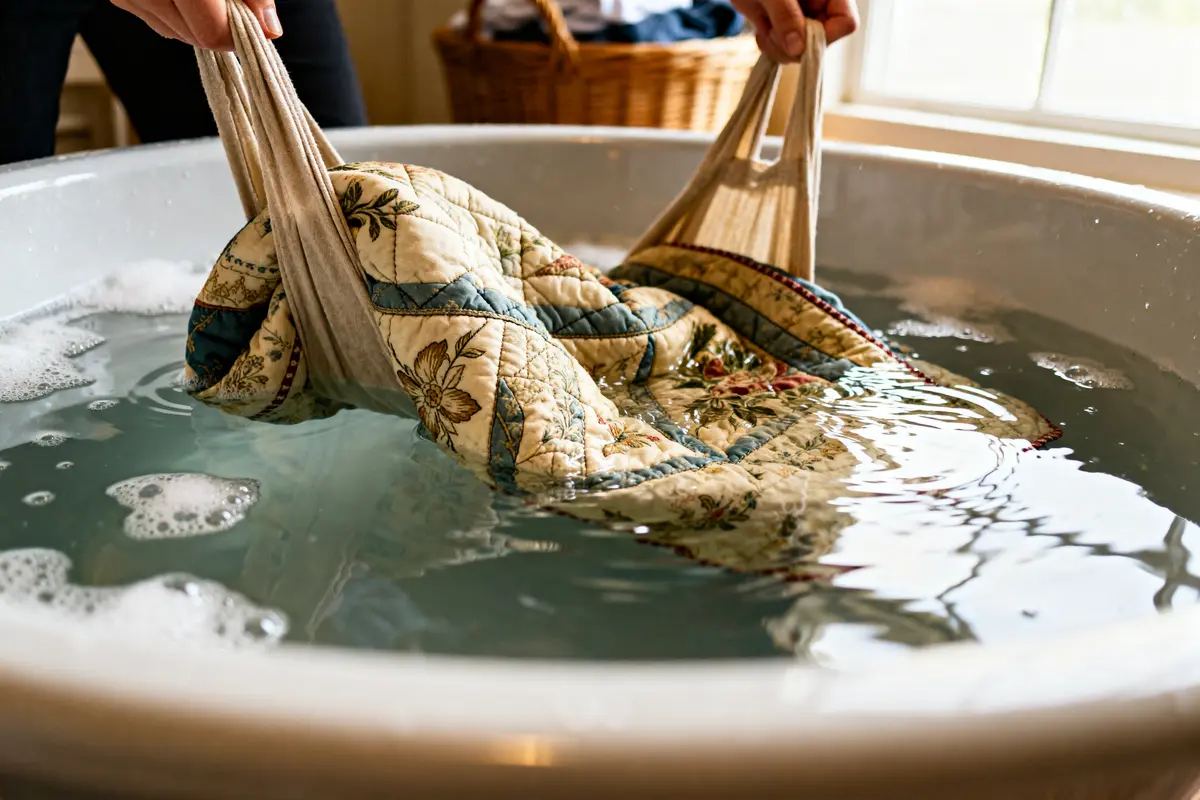
Soaking is a favored method to release dirt while avoiding agitation that can harm delicate textiles. Begin by lining a large tub or basin with a smooth, clean sheet to create a sling. Fill it with lukewarm water set between 75°F and 85°F to protect the quilt’s integrity. Add your diluted mild detergent and gently submerge the quilt, supporting it evenly with the sling.
Let it soak for no more than 6 to 8 hours to achieve thorough cleaning without weakening the fibers from extended water exposure. During soaking, it’s best to refill with fresh water and detergent every 24 hours if the water remains dirty. Use gentle movements only when necessary to encourage soil release, avoiding any vigorous scrubbing or agitation.
When removing the quilt, use the sling to lift it carefully and avoid fabric stretching. Drain the soapy water slowly and follow with a gentle rinse process to clear away detergent residue fully.
How to Wash an Antique Quilt: Gentle-Wash Guidelines
Gentle washing is best for quilts that are in better condition but still require care. Instead of soaking, fill a tub with lukewarm water and a mild detergent diluted precisely as 1 tablespoon per gallon. Submerge the quilt while supporting it with both hands to avoid pulling. Lightly press rather than rub the fabric in small sections.
Wash no longer than 30 minutes overall before draining the water. This reduces the chances of dye bleed or fabric stress. Rinse thoroughly with fresh cool water until the water runs clear.
Always avoid agitators or machines unless specifically designed for delicate textiles. Using a large-capacity washer on the gentlest setting can be risky without controlling water temperature and agitation intensity carefully.
Color and Dyes: Bleed Prevention and Color Catchers
Preventing color bleed is essential for antique quilts, particularly if multiple colors or natural dyes are involved. Before washing, conduct a colorfastness test by dabbing a small white cloth soaked in water onto an inconspicuous area to check if color transfers. If bleeding occurs, avoid full washing sets.
Color catcher sheets can help trap loose dye during washing or soaking. Place a few sheets in your wash or soak water to minimize dye migration to other areas of the quilt. Yet these catchers are not foolproof, so combine their use with proper water temperatures and gentle detergents for best results.
Additionally, avoid mixing an antique quilt with other textiles during washing to reduce the risk of cross-color contamination. Keeping the water temperature stable and in a very narrow range reduces dye bleeding and protects the quilt’s vibrancy.
Author’s Note
“Supporting your quilt during washing with a sling and controlling water temperature precisely helps maintain fiber strength and prevents costly damage over time.”
How to Wash an Antique Quilt: Safe Stain Removal Techniques
Stains on antique quilts demand gentle and targeted treatment. Start by identifying the type of stain—protein-based stains like sweat or blood respond best to enzymatic pre-treatment, while oil or grease stains require a mild solvent approach. Use a soft white cloth or a cotton swab to apply the cleaner only to the spot.
For protein stains, a small amount of cold water and a diluted enzyme detergent can be lightly dabbed on the fabric. Let it sit for 15 minutes, then rinse gently with cool water. Avoid scrubbing as it can distort delicate stitching or fabric weave.
Oxidizing agents like hydrogen peroxide should be used cautiously and only tested in an inconspicuous area, as they may cause fading. Always thoroughly rinse treated areas to remove any residue that could attract dirt later.
Patience is key: multiple gentle treatments yield better results than trying to remove stains aggressively in one go. This approach is critical when learning how to wash an antique quilt, ensuring stains lift without fiber loss.
Drying and Storage to Protect Your Quilt
After washing, drying correctly is vital. Lay the quilt flat on a clean surface to air dry. Using a sheet or drop cloth protects it from dirt below, and placing it in indirect sunlight speeds drying while acting as a natural disinfectant and deodorizer. Avoid direct harsh sunlight to prevent fading.
Never use a clothes dryer on antique quilts. The tumbling action can dislodge batting and strain seams. If hanging is necessary, support the quilt fully along a thick, padded rod to prevent stress points.
For storage, lay the quilt flat or roll it around an acid-free tube wrapped in acid-free paper. Avoid folding over sharp creases as this causes permanent damage. Store the quilt in a breathable cotton bag or acid-free box, keeping it away from direct sunlight, moisture, and pests.
Lignin and Long-Term Care for Antique Quilts
Lignin is a natural compound in plants that can cause yellowing and fiber brittleness over time. It often transfers to quilts from cardboard boxes, untreated wood, or paper stored nearby. While it’s tempting to avoid washing older quilts, removing lignin residues by occasional gentle wet washing actually helps maintain textile integrity.
Careful wet washing aids in dissolving lignin acids, rehydrating fibers, and protecting against brittleness. This supports the quilt’s long-term preservation despite seeming counterintuitive. The best practice is to wash your quilt no more than once or twice a year unless heavily soiled.
When storing antique quilts, avoid cardboard or cedar chests and replace them with acid-free materials to slow lignin-related decay. Maintaining a stable, moderate temperature in storage areas also reduces oxidation damage and keeps fibers resilient.
🧺 Interactive Checklist for How to Wash an Antique Quilt
Follow this step-by-step checklist to wash your antique quilt safely and protect it from damage.
FAQ: how to wash an antique quilt
What is the best detergent for antique quilts?
The best detergent for antique quilts is a mild detergent diluted at 1 tablespoon per gallon of water. Gentle options like PalmOlive liquid dish soap are preferred because they contain minimal additives and avoid harsh chemicals that can damage delicate fibers and dyes.
How to clean a 100 year old quilt without washing?
Cleaning a 100-year-old quilt without washing involves gentle dusting, spot cleaning with mild solutions, and airing it out in indirect sunlight. Avoid soaking or machine washing to protect fragile fibers and dyes, preserving the quilt’s condition without risking damage.
Can a vintage quilt be dry cleaned?
A vintage quilt can sometimes be dry cleaned, but it is generally risky due to harsh chemicals and agitation that may weaken fibers and damage dyes. It’s best to consult a textile conservator or use gentle wet cleaning methods designed for delicate antique quilts instead.
Can a quilt be washed in the washing machine?
Washing an antique quilt in a machine is risky unless the machine is large-capacity and specifically designed for delicate textiles. Even then, controlling water temperature between 75°F and 85°F and agitation intensity is crucial to avoid fabric stress and dye bleeding.
How do you prevent colors from bleeding when washing an antique quilt?
Prevent colors from bleeding by testing colorfastness on an inconspicuous spot before washing. Use lukewarm water within 75°F-85°F, mild detergent, and color catcher sheets to trap loose dyes. Avoid mixing with other textiles and limit soaking or washing time to protect quilt colors.
What is the safest method to dry an antique quilt after washing?
The safest method to dry an antique quilt is to lay it flat on a clean surface with a protective sheet underneath. Dry in indirect sunlight to speed drying while preventing fading. Avoid clothes dryers and hanging without full support, as tumbling and stress points can damage the quilt’s fibers.

Damian is an inquisitive writer with a passion for exploring diverse subjects. He loves sharing fresh perspectives, inspiring curiosity, and sparking meaningful conversations. For him, every topic is an opportunity to learn, connect, and uncover new ideas.